
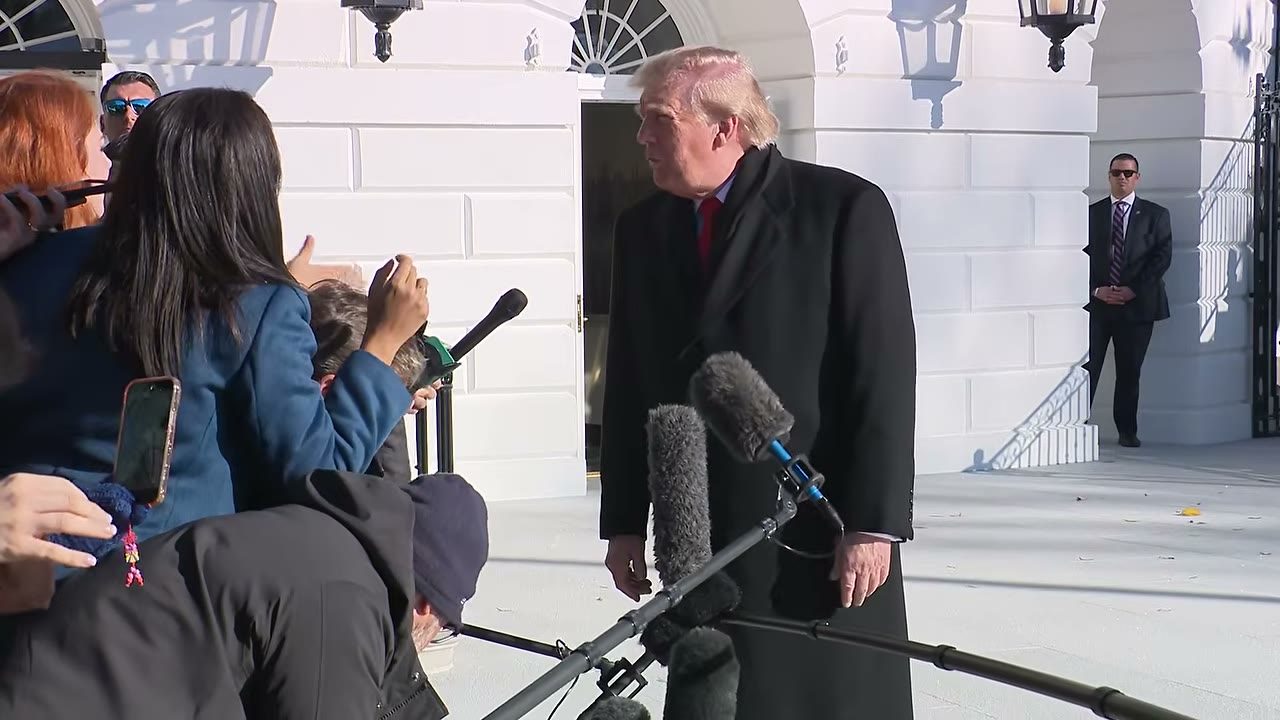
WASHINGTON — U.S. stocks just closed their worst week in years, and President Donald Trump says he saw it coming. In a burst of posts on Truth Social on Sunday and Monday, Trump blamed the sell-off — more than $6 trillion in lost market value, by his count — entirely on the Democrats' victory in the Nov. 3 midterm elections, writing that the decline is "100% the Democrats' fault."
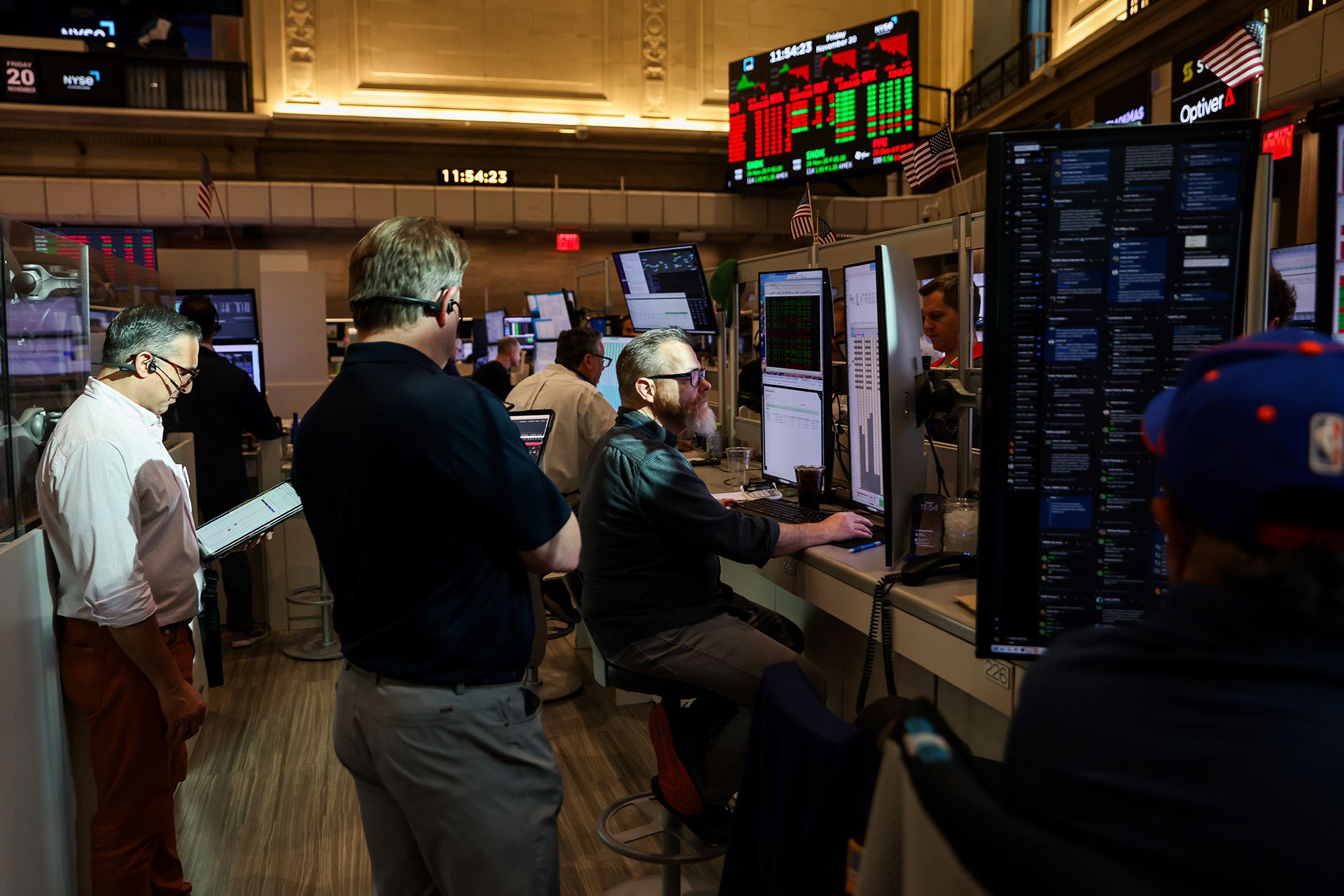
The numbers behind the claim are stark. The S&P 500 fell 3.7 percent on Friday to 6,910.39, its seventh consecutive daily loss — the longest losing streak since February 2020. The Dow Jones Industrial Average dropped 1.9 percent to 48,147.33, its fifth straight loss. The Nasdaq Composite plunged 5.3 percent to 22,617.73, erasing all of its gains for the year. For the week, the S&P lost 8.6 percent, the Dow 8 percent and the Nasdaq 10 percent — one of Wall Street's worst weeks since the pandemic lockdowns of March 2020.
“This is 100% due to the fact that the Democrats are 'BAD' due to their Anti Growth, and Retribution Only, Policies, and worse.”— President Donald Trump, Truth Social, Nov. 23, 2026
How We Got Here
Both the S&P 500 and the Dow have now fallen more than 10 percent from their recent records — a correction — and the Nasdaq-100 briefly entered bear-market territory, down 20 percent from its high. The rout was led by the artificial-intelligence trade: Nvidia fell another 14 percent on Friday and has now lost nearly half its value — about $2.8 trillion — in 45 days, amid a leadership crisis and a federal investigation.
Anthropic, whose record $81 billion debut on Thursday was supposed to steady nerves, fell 8.5 percent on Friday instead. Investors, analysts said, are questioning whether the trillions being poured into data centers will ever pay off — and whether newly elected Democrats, many of whom campaigned against the data-center buildout, will slow it down further. Hawkish signals from Federal Reserve officials, who may raise interest rates again at their Dec. 8–9 meeting, added to the pressure.
Trump, in his posts, said the pattern proved two predictions he made before the election: that markets would fall if Democrats won, and that Iran would grow more aggressive. "As everyone remembers, I predicted two things concerning the November 3rd Midterm Elections," he wrote. "One, that if the Democrats win, the Stock Markets would go down, substantially, which they have, and two, that the Islamic Republic of Iran... will grow more aggressive in their attacks, which has also occurred." In the same burst of posts, he claimed Iran had killed 81,000 protesters and warned that conditions would "only get worse" if Democrats do not change course.
Why It Matters
The claim drew a notably different account from inside Trump's own administration. Treasury Secretary Scott Bessent, appearing Sunday on CBS News' "Face the Nation," said the sell-off "began as the Democrats moved ahead in the polls and then accelerated after Election Day" — but he did not echo the president's single-cause explanation. Bessent pointed to a mix of drivers: Democrats' regulatory stance on artificial intelligence and data-center construction, hawkish commentary from Fed officials, and doubts about the AI buildout itself.
Market strategists note that stocks also respond to interest rates and corporate earnings, none of which turn on a single election result.
Democrats, for their part, have not answered the market blame directly. But the party's leaders spent the weekend pressing a different fight: House Speaker-designate Hakeem Jeffries said Democrats plan "very early on in the new Congress" to end the war in Iran, while Senator-elect Abdul El-Sayed said a funding standoff over the war would be "Donald Trump choosing his war over a functional government." Federal funding expires Dec. 11, and some Democrats are weighing whether to use that deadline to cut off money for the war.
What Happens Next
The first test comes Monday morning, when Wall Street reopens. Futures pointed higher late Sunday — Dow futures up 1.5 percent, S&P 500 futures up about 2 percent and Nasdaq-100 futures up 2.3 percent — suggesting at least a partial bounce after the rout. Whether that holds will say a lot about whether Friday was a panic bottom or the start of something longer.
Beyond Monday, two dates loom: the Federal Reserve meets Dec. 8–9, when traders expect another quarter-point rate move, and Jan. 3, when the new Democratic Congress takes office — the moment Trump's prediction will finally be testable against actual legislation.
For now, the argument is about the past: a $6 trillion hole, a president who says he called it, and a Treasury secretary who says the story is more complicated. The market will have the last word — starting at 9:30 a.m. Monday.
© 2026 Capitol Wire Daily. All rights reserved. Capitol Wire Daily reports facts from official statements and verified reporting; developing stories are labeled as such.


Loading comments…