
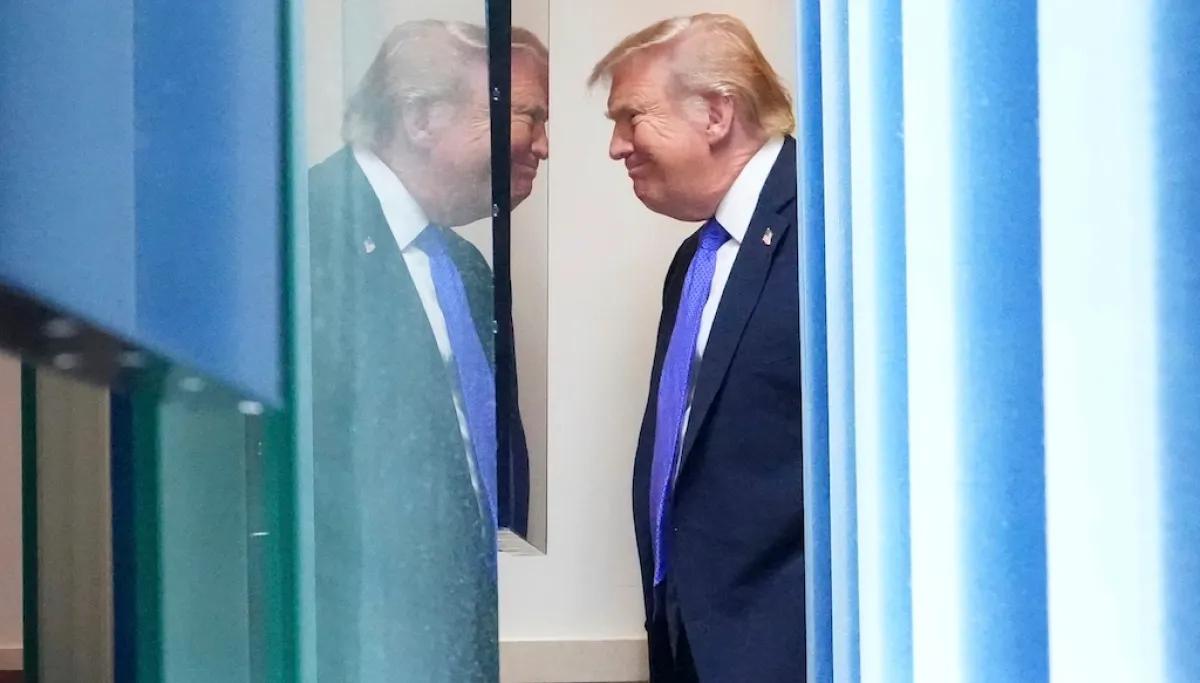
A federal appeals court on Monday gave President Donald Trump a new pathway to erasing his hush money criminal conviction, reviving his bid to move the case to federal court, where he could seek dismissal on immunity grounds.
A three-judge panel of the 2nd U.S. Circuit Court of Appeals reversed a lower court decision that had kept the case in state court, where Trump was convicted on 34 felony counts of falsifying business records.
“Paying hush money to an adult film star or engaging in a cover-up of an embarrassment are not subsumed in presidential immunity.”— U.S. District Judge Alvin Hellerstein
The panel ordered a federal judge to promptly decide whether the U.S. District Court in Manhattan should retain the case. If it stays in federal court, Trump could argue the verdict should be discarded on presidential immunity grounds.
The Details
In a two-page order, the panel said the late Judge Alvin Hellerstein, who died in October at 92, had erred in his rulings. Hellerstein had repeatedly denied Trump's requests to move the case.
The judges ruled Hellerstein "erred in holding that removal is categorically unavailable in a state criminal case" after a conviction, and erred in denying Trump had good cause for two attempts — once after his indictment and again after his trial.
The ruling came a week after Judges Lohier, Walker and Cabranes spent more than an hour questioning Trump's lawyer and a state prosecutor. Lohier and Cabranes were appointed by Democrats; Walker by a Republican.
The decision also halted Trump's state court appeal. The judges wrote that the district court should request "that no further proceedings occur in the state courts while the removal question is pending."
If the case is moved, the lower court should "adopt the state court judgement," the panel said — allowing Trump to argue for the conviction to be tossed out.
How We Got Here
Trump became the first U.S. president convicted of a crime when a jury found him guilty in May 2024. He has denied any wrongdoing and received no punishment.
Trump first sought to move the case weeks after his March 2023 indictment. He tried again after his conviction and the Supreme Court's July 2024 immunity ruling.
After Trump appealed Hellerstein's second denial, the 2nd Circuit ordered the judge to reconsider. That panel expressed no view on how he should rule but told Hellerstein to review evidence Trump claimed was related to official acts.
Trump's lawyers argued federal officers have the right to be tried in federal court for charges arising from conduct while in office. Prosecutors said the Daniels dealings broke state laws and weren't official duties.
Giuffra told the panel last week that prosecutors had used official acts evidence later barred by the Supreme Court's immunity ruling.
Trump has also been appealing in New York's state courts, with arguments before the Appellate Division on Nov. 5. That court has yet to rule and could be prevented from doing so indefinitely.
Steven Wu of the Manhattan DA's office urged the panel to uphold Hellerstein's ruling. The DA's office declined to comment.
Why It Matters
Monday's ruling does not erase the conviction. It opens a procedural door.
If a federal judge keeps the case, Trump can ask the federal courts to throw out the verdict on immunity grounds, arguing the trial used evidence of his official acts that the Supreme Court has since barred.
The ruling also freezes Trump's state appeal, argued on Nov. 5 and awaiting a decision. The case now sits in jurisdictional limbo until the removal question is settled.
His legal team called the ruling "prompt and correct." The path is long — a federal judge must first decide to keep the case — but it is the clearest route yet to wiping out the only criminal conviction ever handed to a sitting or former president.
What Happens Next
The case returns to the U.S. District Court in Manhattan, where a judge must promptly decide whether to retain it. If the court keeps the case, Trump will argue the verdict should be discarded on immunity grounds.
If the federal court sends the case back to state court, Trump's state appeal can resume.
Either way, the conviction is not going anywhere soon. What Monday changed is the forum — and the legal question that will decide whether the first criminal conviction of a U.S. president survives.


Loading comments…