
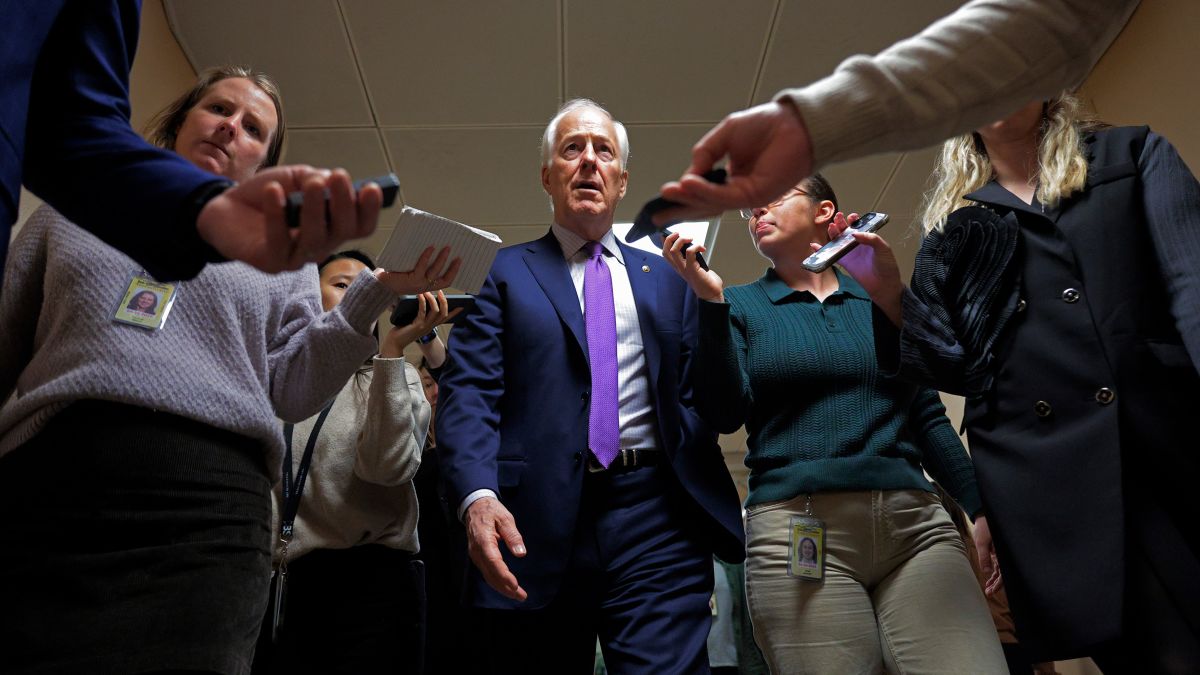
The White House has begun an FBI background check on Steve Fahey, Sen. John Cornyn's preferred pick for a Dallas federal judgeship, as it weighs replacing the nominee Cornyn blocked last week.
The FBI began the investigation over the weekend, a person familiar with the matter told Reuters. Cornyn later thanked Trump and FBI Director Kash Patel in a social media post for initiating the check.
“He's not from Texas. He hasn't been vetted. And this is a lifetime job, and there's better qualified people to hold that job.”— Sen. John Cornyn
The move signals the White House is considering nominating Fahey in place of Justice Department official T. Elliot Gaiser, whose nomination Cornyn stopped by withholding his blue slip.
The Details
Fahey served in the U.S. Attorney's Office for the Northern District of Texas from 2003 until 2021 and tried more than 20 federal trials. He was a partner at Kirkland & Ellis until starting his own firm in 2024.
Cornyn has recommended Fahey for months. The senator said last week his preferred candidate had already been interviewed by White House Counsel and needed only an FBI background check — the step that has now begun.
A background check is a key step before a nomination, though it does not guarantee one. The White House has not announced any decision on Gaiser.
The White House has also begun a background check on a second potential judge, backed by Sen. Thom Tillis of North Carolina.
How We Got Here
Trump nominated Gaiser, 37, to a seat on the U.S. District Court for the Northern District of Texas after the election, with the support of Sen. Ted Cruz. Gaiser, a former Ohio solicitor general who clerked for Justice Alito, heads the Justice Department's Office of Legal Counsel.
Cornyn declined to support the nomination last week, blocking Gaiser from appearing before the Senate Judiciary Committee. By Senate custom, home-state senators can effectively veto trial court nominees by refusing to return a blue slip, a form used to signal support.
"He's not from Texas. He hasn't been vetted. And this is a lifetime job, and there's better qualified people to hold that job," Cornyn told The Associated Press. He said the White House "was trying to jam him down our throat without adequate vetting for a lifetime job."
Trump called the block a "tremendous disservice" in a Saturday interview on Fox News, tying it to Cornyn's hurt feelings after losing the Texas primary to Trump-backed Ken Paxton. Cornyn answered on X, offering his own candidate.
Sen. Cruz had argued Gaiser is the "only nominee who could actually be confirmed by the end of the year," and that the White House had been "explicit" there is no time for a background check on another nominee. The White House has now begun that check anyway.
A handful of Republican senators have withheld support for at least three judicial nominees he picked in their states, and the White House has already been forced to replace one of them.
Why It Matters
The Fahey vetting is a concession. Trump publicly rebuked Cornyn over the weekend, but the White House is now doing what Cornyn asked. If Fahey is nominated and confirmed, Cornyn's veto will have reshaped a lifetime appointment in his final weeks.
Democrats take control of the Senate on Jan. 3, and the White House is racing to appoint as many judges as possible before then. A new nominee needs a background check, a committee hearing and a floor vote — all in about six weeks.
Cornyn will be replaced by Sen.-elect James Talarico, a Democrat, in January 2027. His leverage ends with his term: a nomination made now can still be confirmed by a Republican Senate. One made after Jan. 3 cannot.
For Gaiser, the vetting of a replacement is a public humiliation. Cornyn said he felt badly for the nominee, who he said had "been used basically as a pawn in this process." Gaiser did not appear at Wednesday's Judiciary Committee hearing.
What Happens Next
If Fahey clears the check, the White House must decide whether to withdraw Gaiser and nominate Fahey — a win for Cornyn in his final weeks — or keep Gaiser and risk the seat sitting empty when Democrats take over.
If Fahey is nominated, the Judiciary Committee would need to schedule a hearing quickly, and the full Senate would need to confirm him before Jan. 3.


Loading comments…