
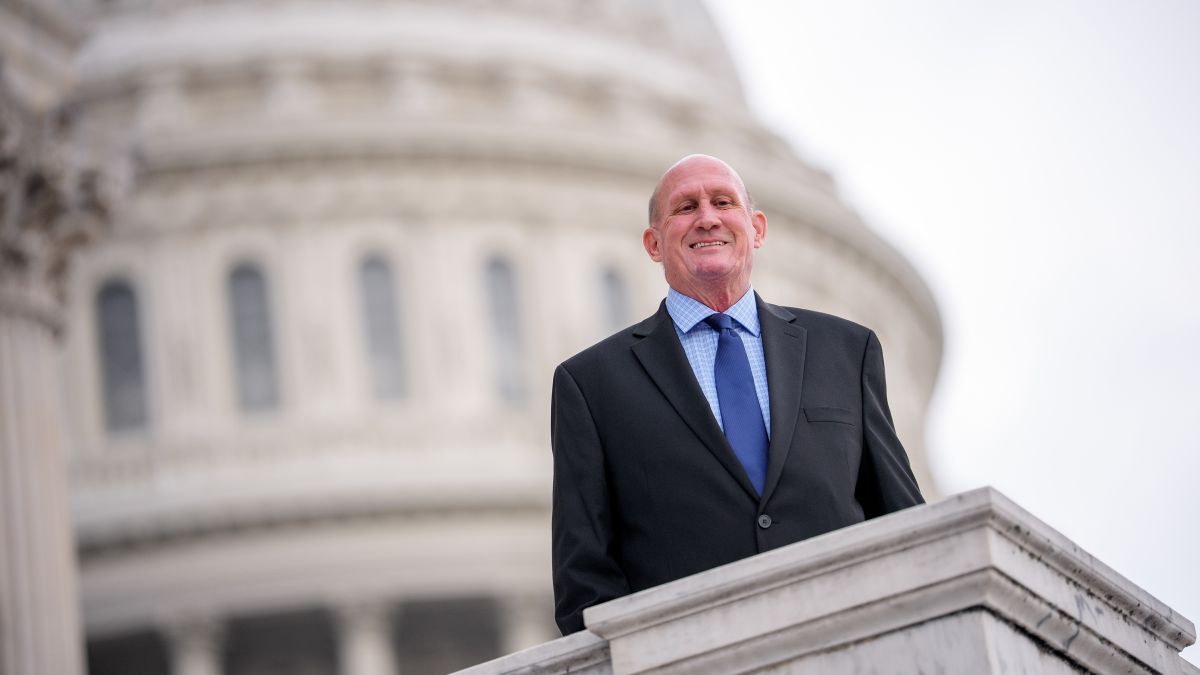
Democrats have clinched their largest House majority since 1992, winning at least 259 seats after Democrat Chuck Hubbard defeated Republican Rep. Virginia Foxx in North Carolina, completing a midterm sweep that gives the party control of both chambers of Congress.
Foxx, the powerful chair of the House Rules Committee, conceded the race on Sunday after a machine recount confirmed she had lost by a narrow margin. Her defeat sets up divided government: a Democratic House and Senate, and a Republican president in the White House.
“I recently called to congratulate Chuck Hubbard on his victory in this election, and I sent him my best wishes as he represents this wonderful district in the 120th Congress.”— Rep. Virginia Foxx
"I recently called to congratulate Chuck Hubbard on his victory in this election, and I sent him my best wishes as he represents this wonderful district in the 120th Congress," Foxx said.
The Details
Hubbard's win gave Democrats at least 259 seats in the 435-member House, with Republicans holding at least 173 — a gain of 44 seats so far, four more than the 40 they picked up in Trump's first midterm in 2018.
The majority is bigger than any the party has won since Bill Clinton was first elected president in 1992, when Democrats held 258 seats, or the election of Barack Obama in 2008, when they held 257.
Foxx, first elected in 2004, chairs the Rules Committee, which controls when bills reach the House floor and how they can be amended. She requested a machine recount after trailing Hubbard, a former journalist, by just 331 votes. It wrapped up on Saturday, and Foxx called Hubbard on Sunday to concede.
"After a hard-fought and thorough election process, the voters of the Fifth Congressional District exercised their Constitutional rights and made their voices heard," Foxx said in a statement.
Four races remain outstanding: one each in Minnesota and Tennessee, and two in Louisiana decided by runoffs on December 12. Democrats lead in Minnesota, where a recount starts November 30.
How We Got Here
The House result completes a sweep that began on election night. Senate Democrats won a 56-seat majority in the 100-member chamber, their biggest advantage in over a decade, after Mary Peltola flipped the Alaska seat.
Voters, angry over high prices and the Iran war and concerned over corruption, made clear their discontent with Trump.
For two years, Speaker Mike Johnson struggled to run the House with a narrow 218-214 Republican majority, where a few GOP lawmakers could derail the agenda. The Democrats will have far more room to maneuver.
Hakeem Jeffries, who is poised to make history as the first Black speaker of the House if his colleagues elect him to the job on January 3, 2027, will be able to lose dozens of Democrats on any given vote and still have the 218 needed for passage.
Why It Matters
As part of a 100-day agenda, Democrats plan swift votes to reverse the Republicans' Medicaid cuts and restore the Affordable Care Act tax credits the Republicans allowed to expire.
Democrats have also vowed to use their subpoena powers for a flurry of investigations, including into how Trump and his family have become wealthier since he returned to office. Jeffries has not ruled out trying to impeach Trump for a third time.
The White House has warned Democrats that such investigations — a standard oversight function of Congress — may amount to "blatant criminality."
Inside the caucus, the debate is already about balance. "Like, hell yeah, we should feel pressure," said Democratic Rep. Jason Crow of Colorado, a former Army Ranger.
Rep. Tom Suozzi, a centrist Democrat from New York, said House Democrats should focus 75 percent of their time on affordability issues and 25 percent on accountability.
Progressive leader Rep. Alexandria Ocasio-Cortez called the result "a mandate for change." "This is a historic moment for our country. This is one of the largest classes we have seen," she said at the Capitol.
What Happens Next
Rep. Jim Jordan of Ohio, who was elected by his colleagues to be the Republican leader in the minority, vowed to fight their way back to power. "Over the next two years, House Republicans will fight for American families," Jordan said.
But the balance of power is already set: on January 3, Democrats take the gavel in both chambers — and the next two years of Trump's second term will be fought under divided government.



Loading comments…