
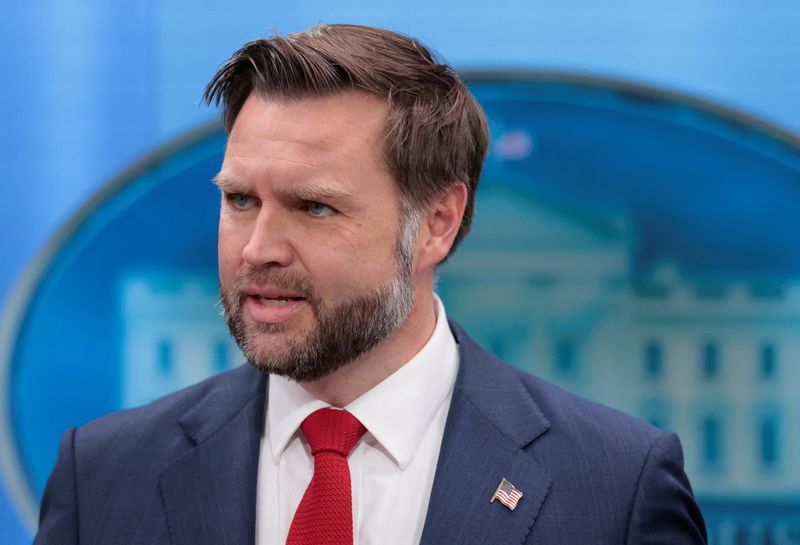
Vice President JD Vance declined on Friday to say he would have ordered the strikes on Iran, refusing to endorse President Donald Trump's claim that Tehran was so close to a nuclear weapon that the United States had to go to war.
The exchange came at a White House news conference, where Trump pressed his deputy to say the February attacks were necessary and that he would carry them out again. Vance defended the goal of keeping Iran from obtaining a nuclear weapon — but not the war itself, or the decision to launch it.
“My view is that my goal is, and my job is, to support the president of the United States.”— Vice President JD Vance
"My view is that my goal is, and my job is, to support the president of the United States," Vance said.
The Details
The moment was set up by Vance himself. The morning after this month's midterm elections, in which Republicans lost both chambers of Congress, Vance posted on social media: "The reason we lost is the war."
"If you'd like to argue it was worth it, that losing the Senate for the next 6 years was worth it, then do so," he added. "Argue it was a worthwhile cost to pay."
Asked on Friday about reporting that he was unhappy with Vance's statement, Trump said: "I didn't say I was unhappy with it." "I thought the statement was fine, except I would have had one other thing, that if it were asked, I would have said that: 'Would you do it again?' And absolutely, the answer is yes, because we cannot allow Iran to have a nuclear weapon."
"People that work for me, they have a right to their opinion," Trump added. "But I say, I know the Iranians, and, frankly, they're crazy."
Asked later whether the war had been worth Republicans' steep congressional losses, Vance did not explicitly endorse the operation.
"Look, what I've said is the goal of keeping Iran from getting a nuclear weapon is absolutely what we need to be doing," Vance said. "It's the biggest state sponsor of terrorism. If they had a nuclear weapon, they would use it as leverage or, God forbid, they would attack and kill thousands, hundreds of thousands, of innocent people."
"I think the president is the one who makes the decision, and the president has said he would do it again," he said.
What Vance did not do was repeat Trump's central claim — that Iran had been weeks away from a weapon — or say the war was essential, or that he would have ordered it himself.
How We Got Here
Trump has made the claim dozens of times over the past nine months. At a campaign rally in Alaska last month, he insisted he had to join Israel in attacking Iran in February because "they were two weeks away from having a nuclear weapon." When he announced the war early on February 28, he said it was necessary to "ensure that Iran does not obtain a nuclear weapon."
In a November 8 "60 Minutes" interview, Trump said he would authorise the strikes again without hesitation.
Vance has long opposed the war. He acted as Washington's main emissary for peace talks, brokering a short-lived truce over the summer, and in recent weeks sent personal correspondence to hardliners in Tehran to revive negotiations. Trump called off the engagements shortly after Vance's post-election assessment, telling him to focus on domestic policy.
"We don't need a deal with Iran," Trump wrote on social media, announcing his direction to Vance. "Those days have long since passed."
Why It Matters
The split is the most public rift yet between the president and his deputy over the war that cost Republicans the midterms. Vance's refusal drew fierce criticism from Republicans, as he weighs a run for president in 2028 — a campaign in which his distance from an unpopular war could become an asset or a liability.
Trump has shown no sign of backing away from the war's justification. His claim that Iran was on the brink of a weapon sits uneasily with public evidence and contradicts his own previous statements on U.S. strikes in 2025.
What Happens Next
As long as the war continues and the 2028 race takes shape, Vance will keep being asked whether he would have ordered the strikes — and whether they were worth the Senate. His answer suggests he has found a formulation he can live with: defend the goal, defer the decision, let the president own the war.


Loading comments…