
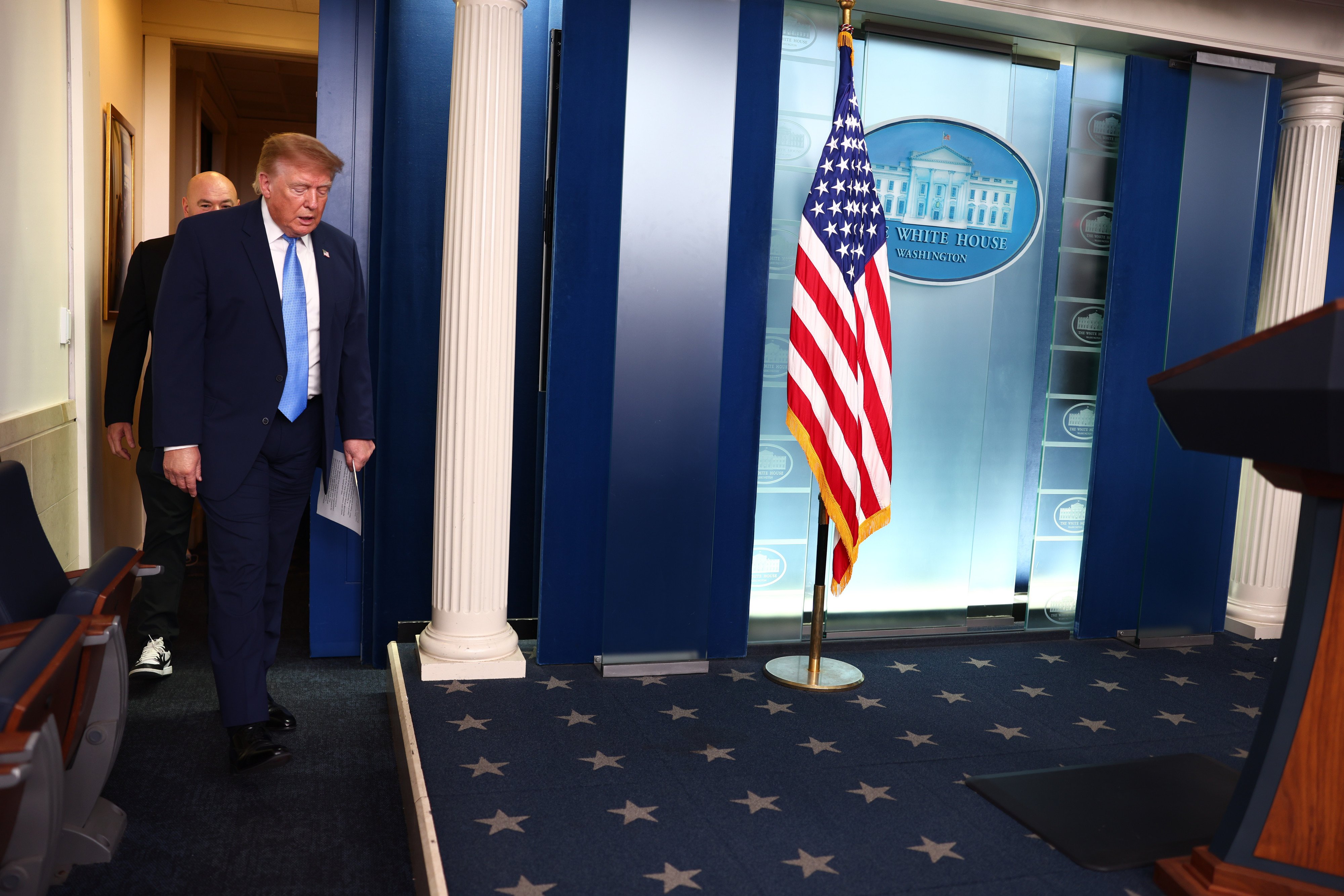
President Donald Trump said on Sunday that it would be "very hard" to work with Senator Chuck Schumer if the Democrat is elected Senate majority leader — just two days after the president predicted he could strike key deals with the Democrats who will control both chambers of Congress next year.
"It is going to be very hard for me to work with Chuck Schumer should he become Senate Majority Leader," Trump wrote on Truth Social. "He failed badly as 'Leader' once before, one of the worst [in] history, and I have little doubt that he will fail again."
“It is going to be very hard for me to work with Chuck Schumer should he become Senate Majority Leader.”— President Donald Trump
The post landed as Schumer faces a leadership challenge from Senator Chris Van Hollen of Maryland, with a secret-ballot vote scheduled for next month.
The Details
Schumer, a New York Democrat, is currently the Senate minority leader, but Democrats take both chambers in January with a 56-44 Senate majority and at least 259 House seats.
Despite the wins, Schumer faces dissatisfied progressives who say a caucus increasingly shaped by younger, anti-establishment lawmakers needs new leadership. Van Hollen has support from parts of the moderate and progressive wings.
Michigan Senator Elissa Slotkin, a centrist, and progressive Senator-elect Abdul El-Sayed have pledged to support Van Hollen, as have Senator Jeff Merkley, Senator Bernie Sanders and incoming Minnesota Senator-elect Peggy Flanagan.
Schumer has said he has the votes to continue as leader. A closed-door, secret-ballot vote is scheduled for next month.
Trump also chided Schumer in the post about the 2016 election, appearing to reference the Senate Intelligence Committee's investigation into Russian interference, and accused him of perpetrating "hoaxes and scams."
USA Today said it had reached out to Schumer's office for comment.
How We Got Here
The Sunday post was a sharp turn from Friday, when Trump called Schumer and likely House Speaker Hakeem Jeffries "smart" and said he could negotiate compromises on health care, immigration and other issues.
"If they want to get things done, I want to get things done, too," Trump said at the White House on November 20.
At the same news conference, Trump said he would likely begin the next Congress with a veto pen in hand, but he also previewed potential dealmaking. "They're going to send things my way and I'm going to veto them," Trump said. "But I think after a month or so they're going to send things and I'm going to veto unless you want to do this and this and this."
The Democrats' 100-day agenda includes swift votes to reverse the Republicans' Medicaid cuts and restore the Affordable Care Act tax credits they allowed to expire — the health care issue Trump has said he wants a deal on.
Speaking on CNN on Sunday, Flanagan said she supported expanding Medicare to cover all Americans. "If we have to call it TrumpCare in order to get it across the finish line, that's fine by me," she said.
Flanagan said she would support Van Hollen for majority leader. "What we heard from voters is that they were pushing back against the status quo," Flanagan said.
Why It Matters
The question of who leads the Senate Democrats will shape how the next two years unfold. A leader Trump says he cannot work with would make the dealmaking he previewed on Friday harder to deliver — while a new leader might reset the relationship, or make it more confrontational still.
For Schumer, the challenge tests whether the midterm sweep strengthens his hand or exposes him. He led the Senate during Joe Biden's term and says he has the votes to keep the job — but the senators publicly backing Van Hollen now span the party's center and its left.
For Trump, the post signals how he plans to frame the coming Congress: veto threats and personal attacks, the language of confrontation rather than Friday's dealmaking. Both tones may be real — a president who wants deals on his terms, already preparing to blame the other side if they do not happen.
What Happens Next
The Senate Democrats will settle the leadership question in a closed-door, secret-ballot vote next month. Until then, Schumer remains the presumptive leader — and Trump has already told him, in public, how hard the next two years will be.


Loading comments…