
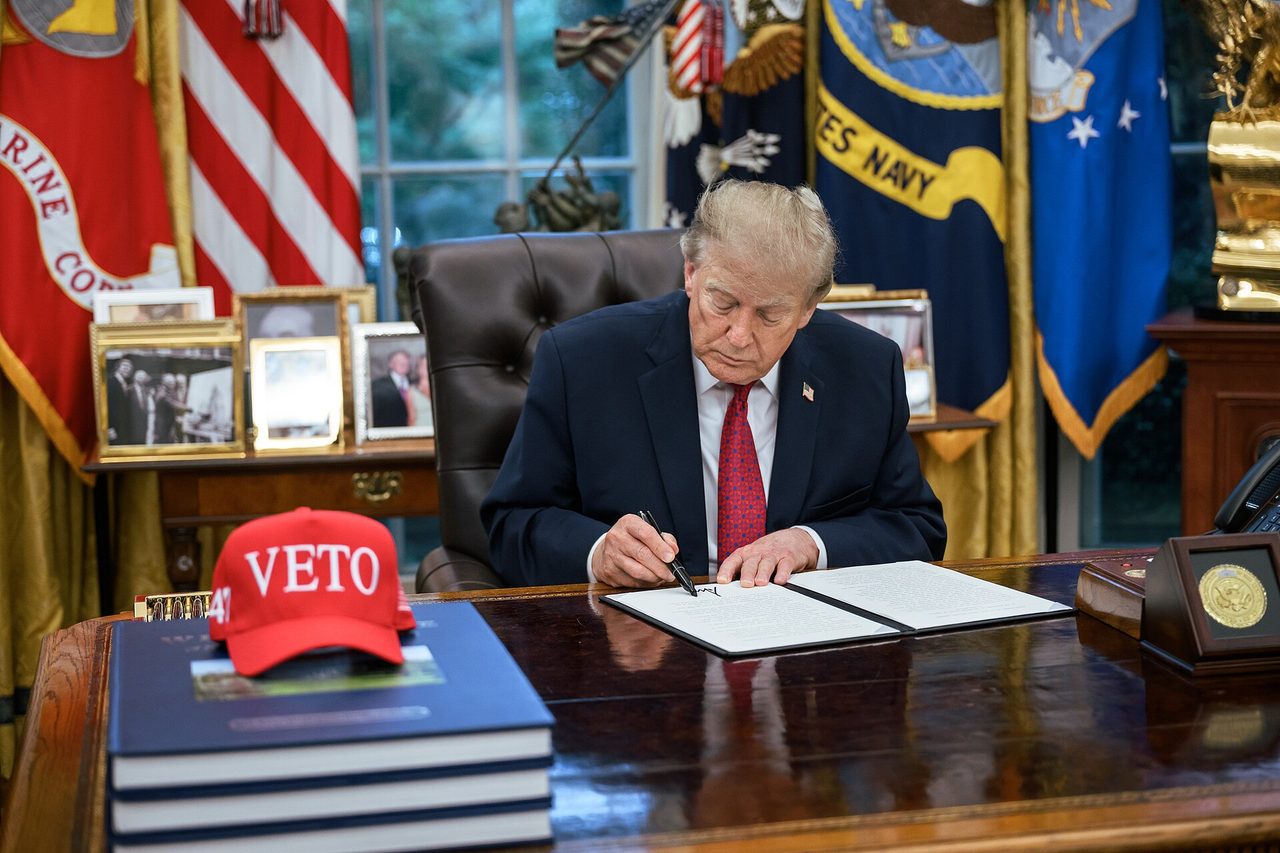
WASHINGTON — On Friday night, President Donald Trump signed an executive order that puts the White House between Congress and the tens of thousands of companies that do business with the federal government. Under Executive Order 14438, every federal contractor and subcontractor must now notify the White House — and the agency that hired them — whenever Congress asks for information about their work or communications with the executive branch.
The order goes further than a heads-up. Contractors must "abide by any instructions received from the White House and contracting agency related to the withholding of communications that the White House or the agency has determined are protected by executive privilege." Companies that do not comply risk having their contracts terminated — or being suspended or barred from future federal work. The Office of Management and Budget has been told to develop guidance on how agencies should enforce the order, with no deadline set.
“Federal contractors are paid with taxpayer dollars, not Trump's personal billions. Public contractors have both a duty and a right to speak truthfully when Congress calls.”— Rep. Jamie Raskin (D-Md.), Nov. 21, 2026
How We Got Here
The order landed 17 days after Democrats won control of both chambers of Congress in the Nov. 3 midterm elections. They take power on Jan. 3, and they have made government contracts one of their top targets for investigation — including the construction of the White House ballroom, contracts flowing to companies linked to the president's family, and the Department of Homeland Security's spending on immigration enforcement.
The groundwork was already being laid. Sen. Richard Blumenthal, who will chair a key Senate investigative panel, sent letters this month to companies asking them to cooperate with a planned inquiry into the ballroom. Rep. Robert Garcia of California, set to chair the House Oversight Committee, sent letters this week directing about a dozen members of the president's family and top administration officials to preserve documents.
The White House has been pushing back in writing. On Nov. 9, White House Counsel Will Scharf wrote to Garcia suggesting that some of the planned investigations could amount to "blatant criminality" and arguing that Democrats, not yet in the majority, cannot compel compliance. On Monday, Scharf told federal agencies they must seek approval from his office and the White House's Office of Legislative Affairs before their officials agree to appear before Congress, the Associated Press reported.
Why It Matters
The order turns a constitutional argument into a business risk. The White House says executive privilege — the president's ability to keep certain confidential communications from disclosure — is rooted in the separation of powers, and that uncoordinated disclosures by contractors could expose sensitive information, including material touching on national security. Its fact sheet accuses "certain congressional leaders" of "harassing private companies that contract with the federal government."
Democrats read it the opposite way. Rep. Jamie Raskin of Maryland, poised to chair the House Judiciary Committee, called the order "unprecedented and blatantly unlawful" in a statement Saturday. "Federal contractors are paid with taxpayer dollars, not Trump's personal billions," he said. "Public contractors have both a duty and a right to speak truthfully when Congress calls." Garcia called it a "blatant attack on Congress' constitutional right to conduct oversight" and said, "we're just getting started."
Legal analysts say the order will almost certainly face court challenges and note that it sits in tension with existing laws requiring cooperation with Congress. The order cites the Federal Property and Administrative Services Act, which gives presidents broad authority over government-wide procurement policy. But it sets no deadline for the OMB guidance, no procedure for how notice should be given, and no time limit for the White House to review a request — and, as one law firm's analysis put it, it is not self-executing, so its real effect depends on what agencies do next.
What Happens Next
The immediate test is the guidance: until OMB issues it, contractors are left to guess how to comply — caught between the threat of losing federal business and the threat of contempt of Congress if they withhold material lawmakers demand.
The bigger test arrives on Jan. 3, when Democrats take the gavels. Garcia has said the investigations will proceed despite the order, and Raskin has said "accountability and the Rule of Law are coming." Whether the courts step in first — and whether agencies start enforcing the order before then — will decide how much of Congress's oversight power survives the next six weeks.
© 2026 Capitol Wire Daily. All rights reserved. Capitol Wire Daily reports facts from official statements and verified reporting; developing stories are labeled as such.


Loading comments…