
Honda and Toyota are recalling about 1.6 million cars, trucks and SUVs in the United States and around the world after warning that Takata airbag inflators in the vehicles can rupture and spray sharp metal fragments into the cabin.
The two automakers announced the recalls on Friday, the latest chapter in the long-running Takata airbag crisis — the largest auto safety recall in American history, which drove the Japanese supplier into bankruptcy in 2017.
The Details
Honda is recalling 810,592 older cars and SUVs in the United States. The campaign covers certain 2013 Honda Accord, 2012 to 2013 Honda Civic, 2012 to 2013 Honda CR-V, 2013 Acura ILX and 2013 Acura RDX vehicles.
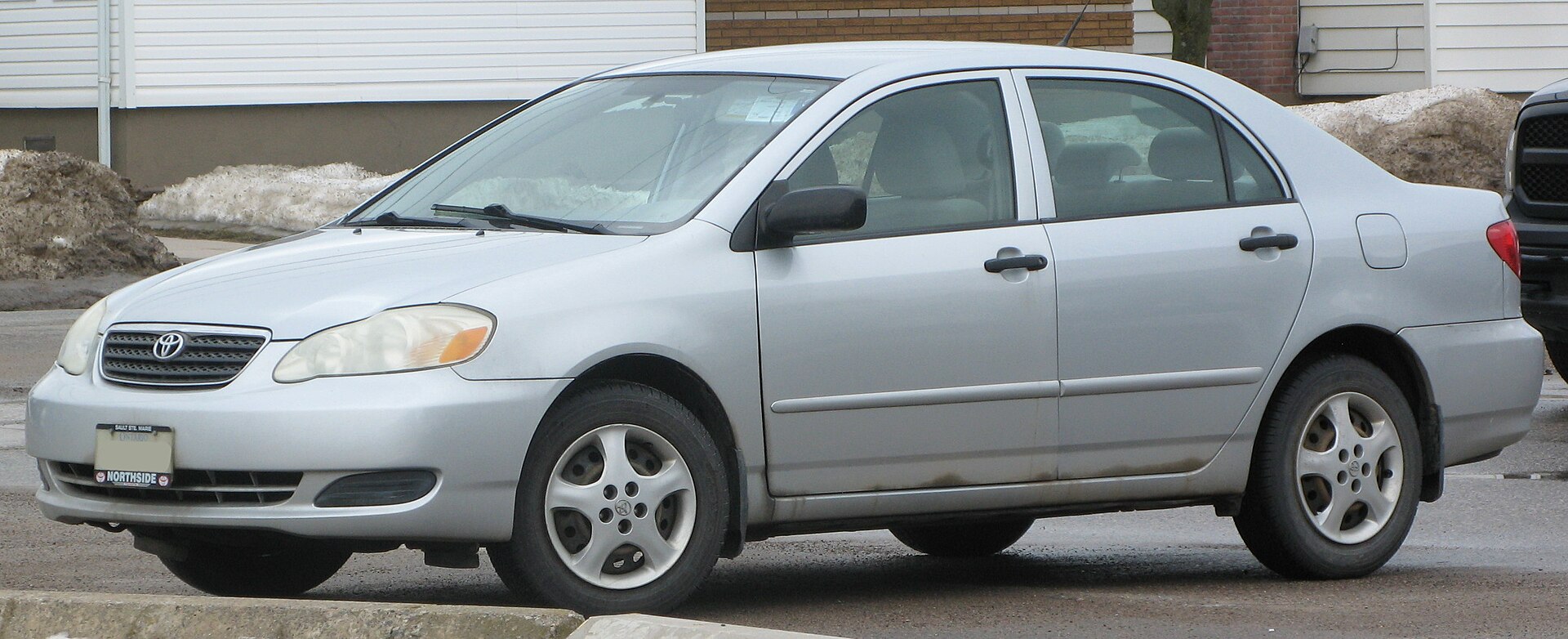
Toyota is recalling 790,000 vehicles worldwide, including 314,029 in the United States, under National Highway Traffic Safety Administration campaign number 26V748. The American total covers seven nameplates spanning model years 2002 to 2017: the 2003 to 2008 Toyota Corolla, the 2005 to 2006 Tundra, the 2005 to 2007 Sequoia, the 2016 to 2017 4Runner, the 2002 to 2010 Lexus SC430, the 2011 Lexus IS250 and the 2017 Lexus GX460.
The Corolla accounts for the largest share by far — 232,174 vehicles — followed by the 4Runner at 35,949, the Tundra at 25,174, the Sequoia at 10,736, the GX460 at 8,931, the SC430 at 1,064 and a single IS250.
The problem is the propellant inside the front passenger airbag inflator. The inflators use phase-stabilized ammonium nitrate, known as PSAN, which can degrade over time after long exposure to high humidity, high temperatures and repeated temperature swings. If the airbag deploys, the degraded propellant can cause the inflator to rupture instead of inflating the bag, sending metal fragments toward the driver or passenger.
How We Got Here
Toyota announced its voluntary recall on November 12, and the safety regulator acknowledged the filing in a letter dated November 18. Reuters reported the agency's disclosure on November 19, and the combined Honda and Toyota figures were confirmed on Friday.
Toyota's own filing says the company has collected and analysed this type of inflator since 2016 without observing measurable propellant degradation, but decided on November 6 to issue the recall anyway, using a study by TK Global — Takata's successor — of the inflators' estimated service life and the dates they entered service. The company said it decided to err on the side of caution as the inflators approach the end of their safe service life.
The recall covers only vehicles fitted with the suspect front passenger airbag inflators, whether installed at the factory or fitted as replacement parts during an earlier recall. Toyota said it has not seen any ruptures tied to these specific inflators. The regulator has not issued a do-not-drive or park-outside advisory for the campaign.
Why It Matters
The Takata crisis has haunted the auto industry for more than a decade. Tens of millions of vehicles have been recalled worldwide after defective inflators were linked to deaths and injuries, and the scandal forced Takata, once one of the world's largest airbag makers, into bankruptcy protection in 2017. Friday's recalls show the clean-up is still not finished: inflators fitted as long ago as 2002 are still on the road, and some were even installed as replacement parts during earlier recalls.
For owners, the risk is specific but serious. The defect only matters if the airbag deploys in a crash — but that is exactly the moment the device is supposed to save a life, not endanger one. The good news is that the fix is free and straightforward: dealers will replace the front passenger airbag inflator, or the entire airbag assembly depending on the model, at no charge to the owner.
What Happens Next
Toyota says replacement inflators will be ready by early 2027. Owner notification letters are expected to start going out on December 28, 2026, with Toyota's own announcement saying owners will be notified by mid-January 2027. Owners can check whether their vehicle is involved by entering its vehicle identification number at Toyota.com/recall or nhtsa.gov/recalls, or by calling Toyota's Brand Engagement Center at 1-800-331-4331. Honda owners should check the same federal database for their vehicles.

Loading comments…