
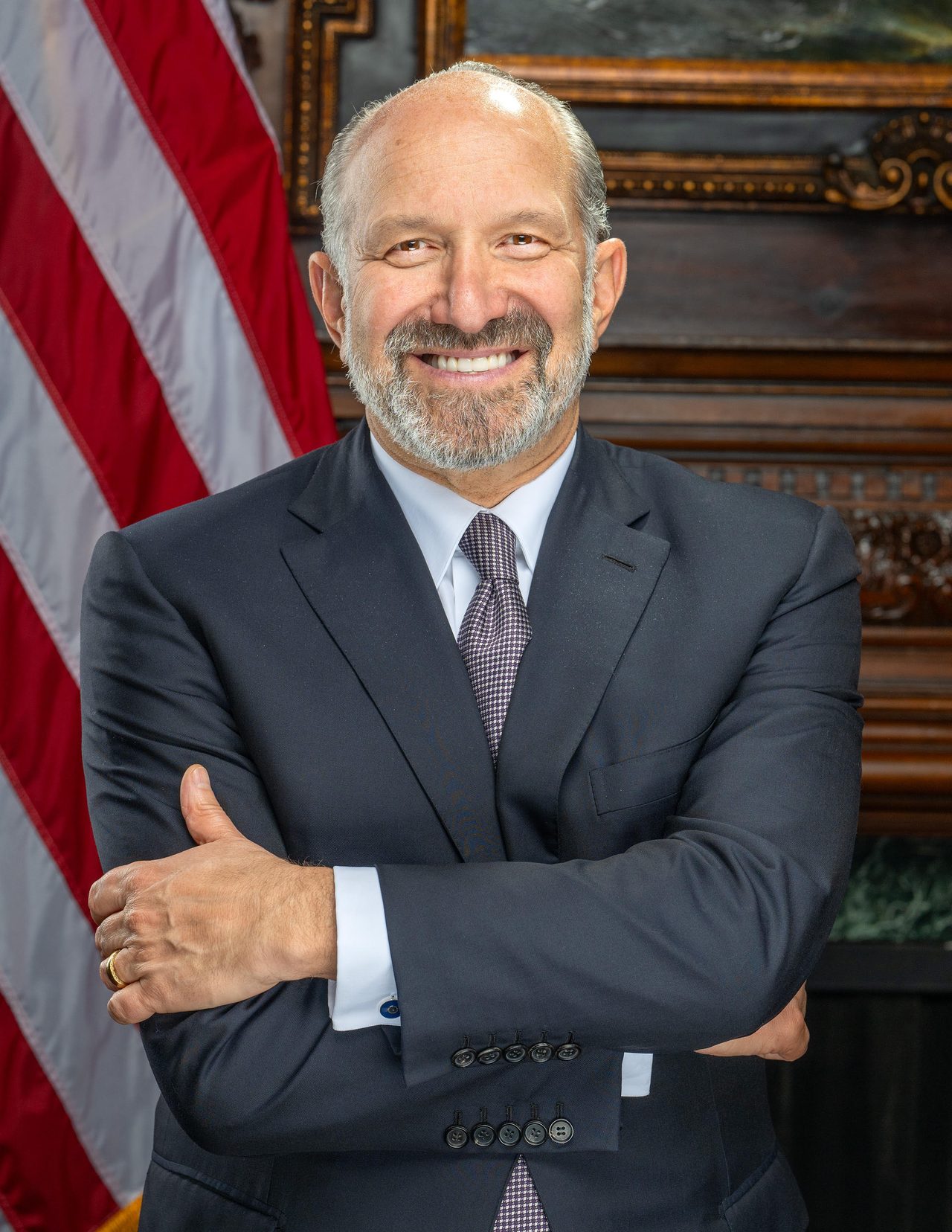
WASHINGTON — President Donald Trump was close to firing Commerce Secretary Howard Lutnick earlier this year after Lutnick acknowledged visiting Jeffrey Epstein's private island, according to a Wall Street Journal report published Saturday — and the talk of removing him stopped only after Lutnick gave $25 million to Trump's presidential library.
"But Lutnick, a billionaire and former chairman of Wall Street firm Cantor Fitzgerald, made a $25 million donation to Trump's presidential library, and Trump stopped talking about replacing Lutnick," the Journal reported, citing people familiar with the matter. The donation was first reported in "Regime Change," the book by New York Times reporters Maggie Haberman and Jonathan Swan.
“Trump solicited the contribution, and made clear in private it was the only thing that saved Lutnick's job.”— Maggie Haberman, The New York Times, confirming the Journal's report on X, Nov. 22, 2026
How We Got Here
Lutnick's Epstein ties surfaced in February, when he told the Senate Appropriations Committee that he and his family had visited Epstein's Caribbean island, Little St. James, in 2012. He said he had cut off contact with Epstein in 2005, after being shown a massage table at Epstein's New York home — but emails released by the Justice Department showed the two men stayed in touch for years afterward, with their last emails in 2018.
The visit, and the contradiction, put Lutnick's job at risk. The Journal reports that Trump was close to ousting him — and that the $25 million library donation changed the conversation. Haberman confirmed the account on Sunday, adding that Trump himself solicited the contribution and made clear in private that it was the only thing that saved Lutnick's job.
Lutnick has not been charged with any crime. The White House said on Sunday that Trump "maintains complete confidence" in Lutnick, and no official response has come from Lutnick's office.
Why It Matters
The report lands as the Epstein files fight reaches a new stage. Trump signed the Epstein Files Transparency Act into law last week, after the House and Senate forced the Justice Department to open its files — a bill the president had resisted for months before reversing course and taking credit for it. The law requires the Justice Department to release its Epstein files within 30 days, with redactions permitted only to protect victims and material tied to ongoing investigations. Representative Thomas Massie, the Kentucky Republican who forced the bill to the floor, raised Lutnick's Epstein ties on the House floor last week.
It also lands amid fresh scrutiny of Lutnick inside the administration. Senator Tom Cotton, who chairs the Senate Intelligence Committee, told the Journal that Lutnick repeatedly ignored warnings that American artificial-intelligence chips were being smuggled to China. Treasury Secretary Scott Bessent criticized Lutnick's agency on CNBC last week, and the Journal reported that some Commerce officials believed the comments could cost Lutnick his job.
Lutnick's standing with Trump has long rested on a personal bond. The two New Yorkers have been friends for more than 20 years, and the Journal reported that Lutnick sometimes meets the president at the White House for off-the-books meetings after staff have gone home — giving him access few other cabinet secretaries enjoy.
What Happens Next
Incoming House Oversight chairman Robert Garcia has ordered 13 Trump allies to preserve records, naming the White House's handling of the Epstein files as a core target, and has demanded answers on Ghislaine Maxwell's move to a minimum-security prison camp by November 27. Democrats take control of the House and Senate in January, when Garcia takes the gavel.
For now, Lutnick remains in place — a secretary who, by the Journal's account, kept his job with a check. Whether Congress presses him for answers, and whether the $25 million becomes a question in its own right, will be decided in the weeks ahead.
© 2026 Capitol Wire Daily. All rights reserved. Capitol Wire Daily reports facts from official statements and verified reporting; developing stories are labeled as such.



Loading comments…