
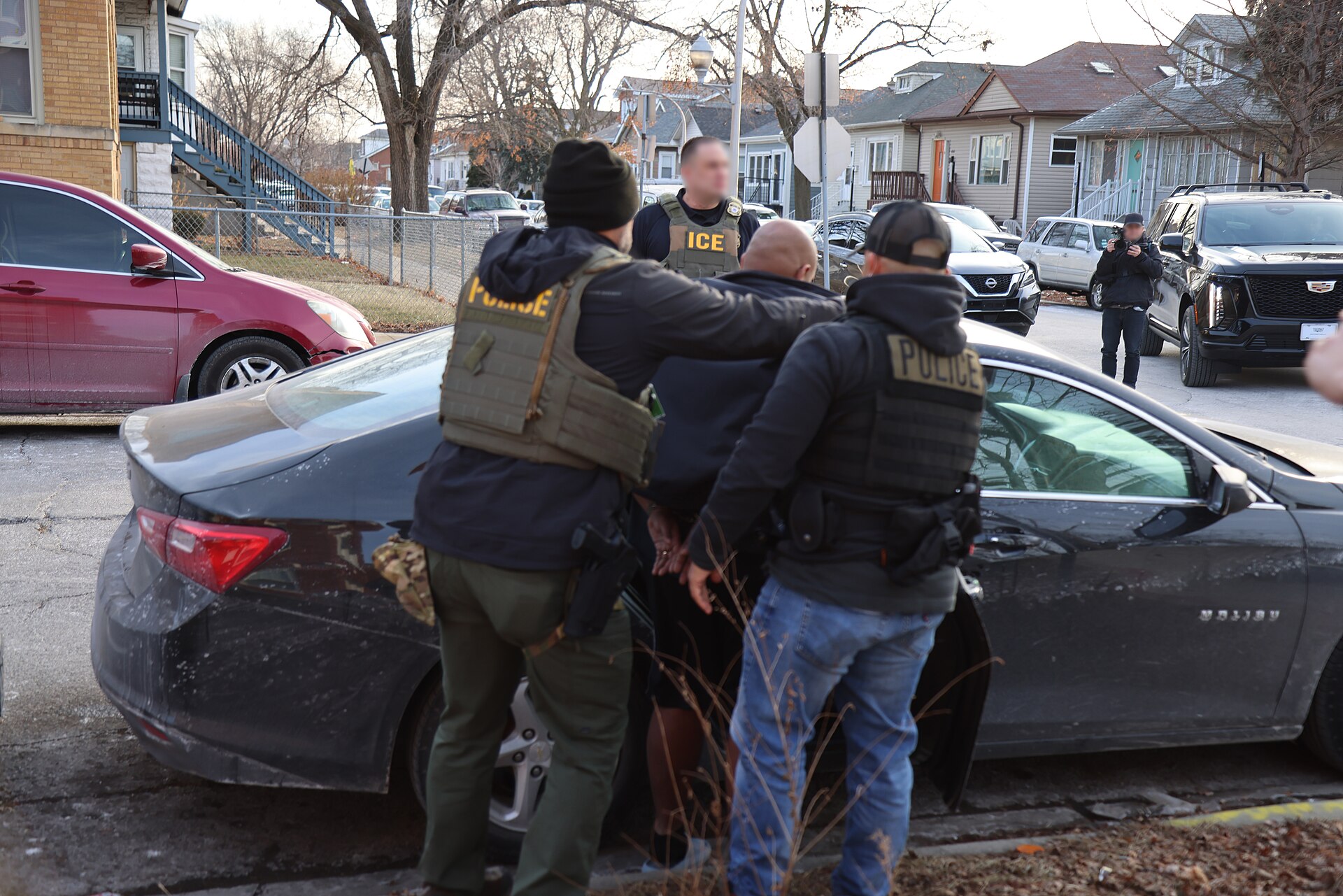
The Department of Homeland Security went too far last year in loosening training standards for thousands of immigration officers hired to support President Donald Trump's mass deportation push, an internal department watchdog has found.
The findings, in a 19-page draft report that has not been finalized or released, amount to a sweeping critique of the plan carried out under Kristi Noem, the homeland security secretary at the time, to rapidly hire and deploy 10,000 new officers with the help of tens of billions of dollars provided by Congress.
“Some students clicked through the learning modules without absorbing content.”— DHS inspector general's draft report
One recruit instructor quoted in the draft report called the rollbacks in training standards a "catastrophic failure."
The Details
The draft report, from the Homeland Security Department's Office of Inspector General and obtained by The New York Times, found that nearly 6,000 officers went through a sharply curtailed training model between August 2025 and July 2026.
More than 3,500 recruits with prior law enforcement experience were allowed to complete their basic training virtually, instead of attending a monthlong in-person program. More than 80 percent of them finished the online coursework within 10 days, more than 10 percent in under 24 hours, and at least five in about two hours.
"Some students clicked through the learning modules without absorbing content," the draft report noted. One ICE Enforcement and Removal Operations official said the "virtual training appeared ineffective for many recruits, and they would have preferred that those recruits take in-person training instead."
For the more than 2,000 recruits without law enforcement experience, instruction was cut from 543 hours to roughly 300 hours, and the academy was shortened from 72 days to 42. The draft also criticized the relaxing of a policy that had given recruits only two chances to pass a training test. With the cap removed, one officer took the test 32 times before passing.
Nearly 90 percent of ICE officials who ran field training and answered the watchdog's questionnaire said the on-the-job training program was not successful.
How We Got Here
The draft says former Secretary Noem and adviser Corey Lewandowski strongly supported the reductions, and ICE's former training chief told investigators he was ordered to carry them out.
A whistleblower who previously worked as an agency lawyer described the entire training process as "deficient, defective and broken."
Current Secretary Markwayne Mullin, who took over in March after the president fired Noem, restored the more robust training standards in July. However, the draft said that "despite increasing training hours and days for future recruits, ICE has not fully addressed training gaps born of the reductions and revisions."
Two days before the report surfaced, Mullin told the House Homeland Security Committee that officers who have not completed full background checks or the full 13-week training are on administrative leave.
The draft report did not consider whether lax training had contributed to problems on the ground. ICE has maintained that its training was adequate.
Why It Matters
The report lands at a moment when ICE's conduct is under intense scrutiny, with several shootings and other incidents raising concerns about whether poorly qualified or insufficiently vetted recruits received ICE credentials. The reporting does not establish that every incident resulted from the shortened training — and the draft's findings remain subject to the department's review.
But the numbers describe an institutional choice, not an accident: the administration set an enforcement target, weakened the safeguards that slowed progress toward it, and deployed officers before the resulting training gaps had been repaired.
The watchdog's own office pushed back on how the findings became public. "We strongly condemn the premature release of draft reports before the department has had the opportunity to complete its review and provide formal comments," the inspector general's office said in a statement. Inspector General Joseph V. Cuffari is one of the few internal agency watchdogs Trump did not dismiss after retaking office.
What Happens Next
The draft report has not been finalized, and its figures could change before a final version is released. The inspector general's office is also investigating other issues within ICE, including detention practices, arrests of U.S. citizens, and the agency's use of force.
For now, the question facing Mullin is whether restoring standards for new hires is enough — or whether the thousands of officers already in the field, trained under the curtailed model, need to be retrained before the gaps close.

Loading comments…