
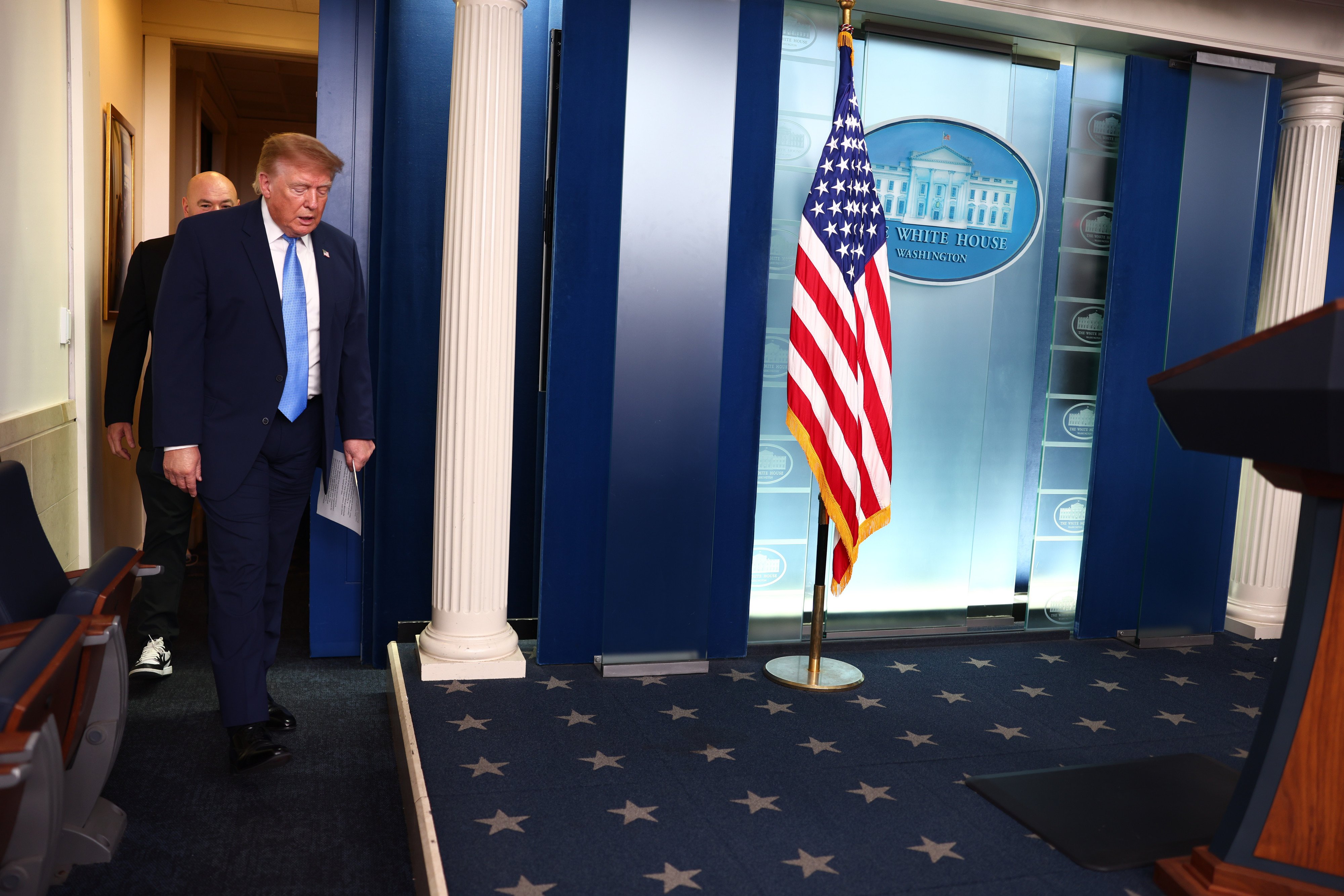
President Donald Trump said on Friday that the United States would penalize American companies that build data centers overseas, telling reporters at the White House that firms choosing to build abroad would face a "tremendous tax."
"We're not going to allow our companies to build data centers outside of our country," Trump said at a news conference following his return from Asia, where he met China's Xi Jinping and Russia's Vladimir Putin. He said his administration would "fight very hard" to keep the facilities in the United States — and put "tremendous penalties" on companies that build them elsewhere.
“We're not going to allow our companies to build data centers outside of our country.”— President Donald Trump, White House news conference, November 20, 2026
The Details
Trump framed the move as a contest with China over artificial intelligence. "We're not allowing data centers to go into other countries because China will take all of them, and we're not allowing that to happen," he said. Data centers provide the computing power needed to train and run increasingly complex AI systems, and a penalty on building them abroad could complicate the global AI buildout.
The president offered no details on how the tax would work — no rate, no timeline, no mechanism — and did not say whether it would apply to projects already under construction. A tax, unlike an executive order, would need Congress to pass it. Democrats take control of both chambers in January.
Trump also said communities should welcome data centers and negotiate deals to "make them pay you" — a nod to the backlash over rising electricity bills near the facilities.
Developers often build data centers close to users to cut delays for time-sensitive work such as payment processing, and moving large volumes of data over long distances adds cost — a practical reason companies build abroad in the first place.
How We Got Here
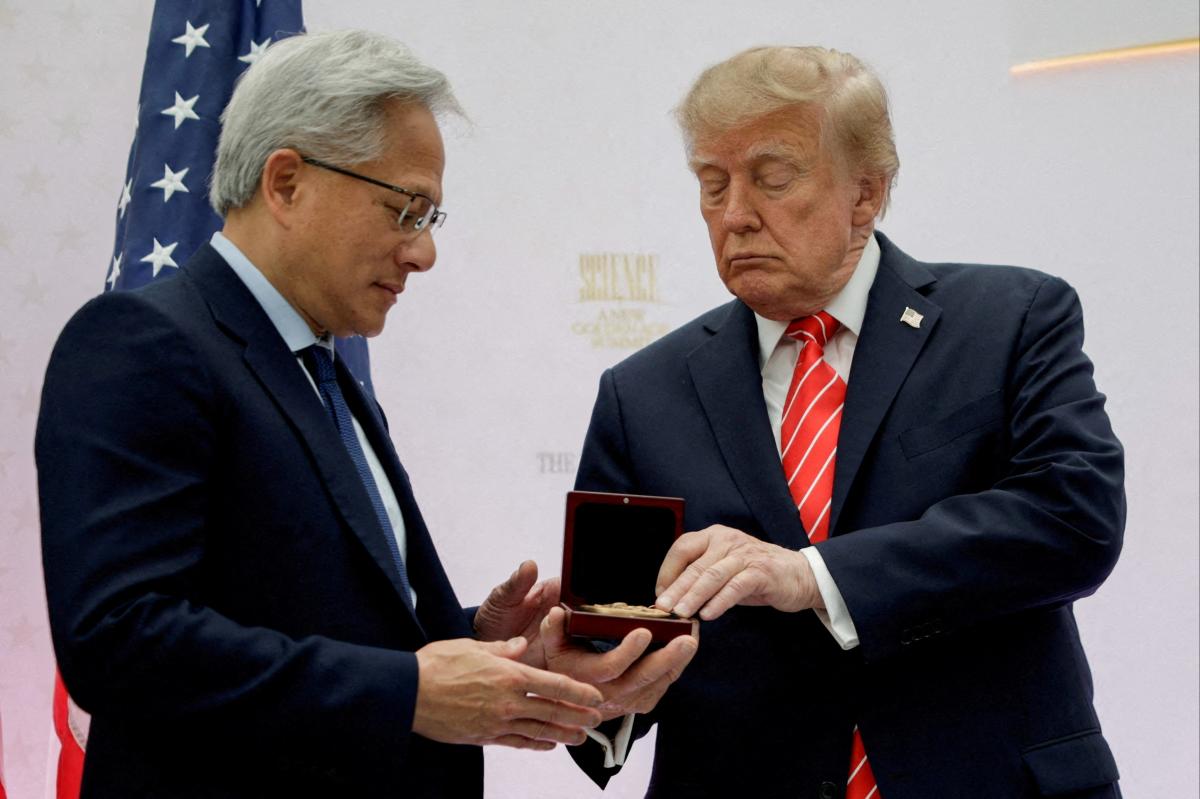
The announcement caps months of pressure from Trump to keep the AI buildout on American soil. On September 29, after a White House meeting with the heads of Nvidia, Anthropic, Microsoft, Tesla and Amazon, he pointed to data-center construction in Finland and said, "Frankly, I want them built in America."
Finland has become the symbol of the overseas boom: its data-center investment pipeline has reached $75 billion — about 9 percent of the global total — led by Google's €13 billion multi-site expansion. That project is now under stop-work orders from Finnish environmental authorities after contractors cleared an estimated 250,000 trees across 330 hectares without permits.
At home, Trump has moved in the opposite direction. In March, Amazon, Google, Meta, Microsoft, OpenAI, Oracle and xAI signed the White House's Ratepayer Protection Pledge, agreeing to pay the full cost of the power their data centers need. In October he said on social media that large new data centers should generate their own electricity and pay host communities a "dividend." And earlier this month he signed an executive order to speed up AI data centers on federal land, with faster permitting and financial support for projects over 100 megawatts.
Why It Matters
The penalty, if it ever becomes law, would hit the biggest builders of AI infrastructure at the moment they are spending the most. The AI boom runs on data centers, and the United States is racing China to build more of them, faster. Pushing construction home could strengthen that lead — or, if companies cannot build fast enough at home, slow the buildout down.
The other side is the rest of the world. Countries that have courted American tech investment — Finland among them — would lose projects and the jobs that come with them. And the companies themselves face a choice between higher costs abroad and the delays of building at home.
As of publication, none of the major data-center builders had publicly responded to the announcement. The White House has not said when — or whether — a formal proposal will follow.
What Happens Next
Watch for a formal proposal — and for whether Congress, which must approve any tax, takes it up. Watch too for the market reaction when trading resumes, and for how Google, Microsoft, Amazon and Meta respond. If the penalty stays a threat rather than a law, Friday's announcement will be remembered as a warning shot. If it becomes policy, it will redraw the map of where the world's AI gets built.

Loading comments…