
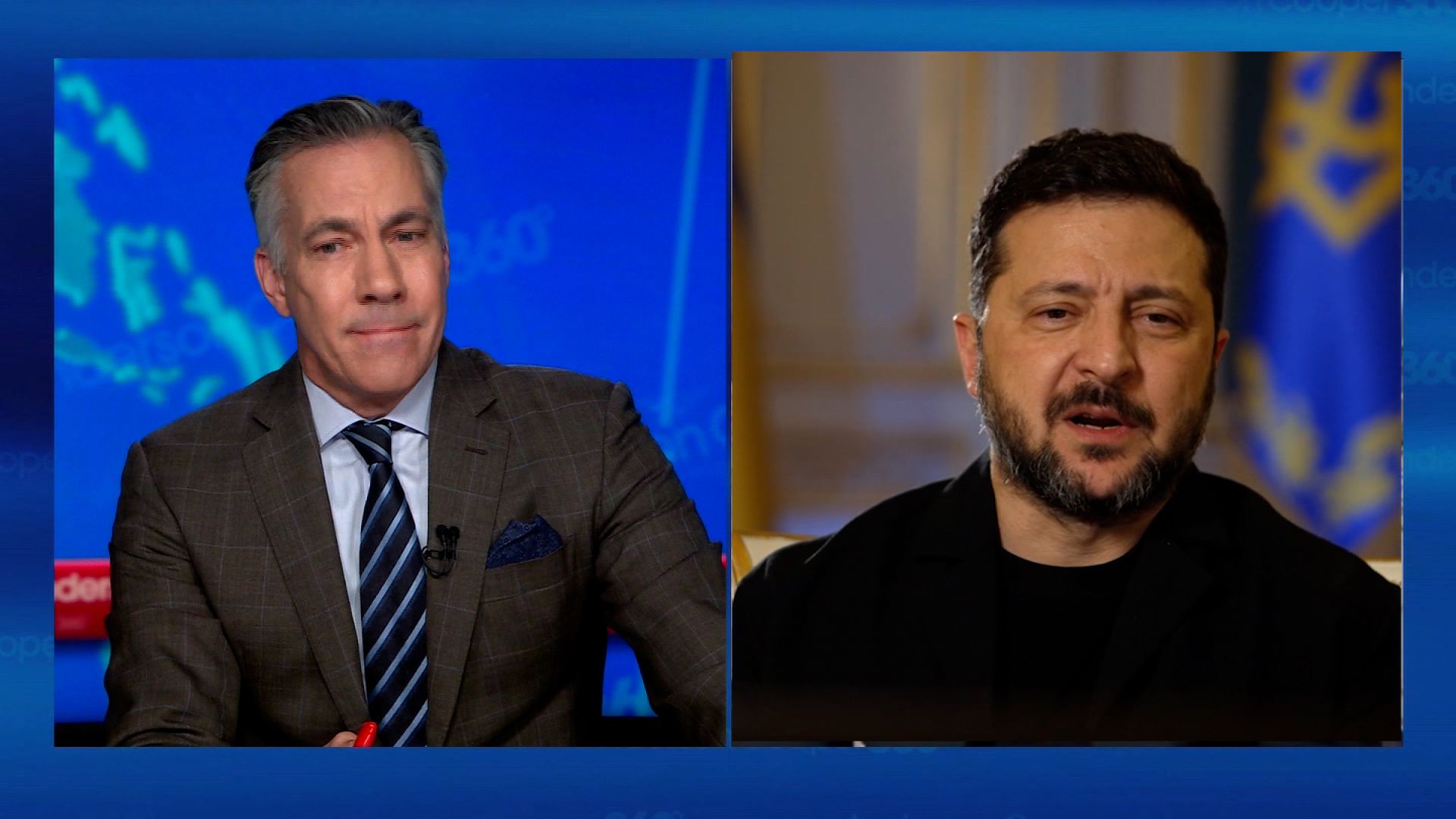
Ukraine's President Volodymyr Zelenskyy has rebuked Donald Trump for calling Vladimir Putin a "friend", telling CNN that for Ukrainians the Russian leader is "a killer" — hours after Russia's biggest aerial assault of the year.
"Of course, it's up to President Trump how to call Putin…. for us, he is an enemy, and of course, for us he is a killer. And I think, mostly, for the people in the world, he is a killer because he is killing," Zelenskyy told CNN's Jim Sciutto on Friday. Asked whether the word gave Putin licence to keep attacking, he said: "If you say and speak about Putin … like he is a friend … of course, he doesn't feel that he is a killer, he doesn't feel enough pressure … he feels like he can continue."
“For us, he is an enemy, and of course, for us he is a killer.”— Volodymyr Zelenskyy, president of Ukraine
The Details
The interview came hours after Russia fired at least 110 missiles — 27 ballistic — and more than 400 drones at Ukraine overnight, in what Zelenskyy called "the biggest this year". "It was very difficult, we had losses, dead civilians, wounded people, absolutely terrible night," he said. At least eight people were killed and 28 injured.
Only three of the 27 ballistic missiles were intercepted — Ukraine is critically short of Patriot interceptors. Zelenskyy described the tactics as "particularly vicious": waves of missiles launched 20 to 30 minutes apart "to make it harder to put out fires, clear rubble, and carry out repairs."
On Friday evening, as the interview aired, Russia struck again — a double-tap ballistic missile attack on central Kryvyi Rih, Zelenskyy's hometown. A seven-year-old boy and a 20-year-old paramedic were killed and 42 people injured, four of them children. Drones hit the site again as rescuers worked.
How We Got Here
The row began in Shenzhen on Thursday, where Trump greeted Putin as "my friend" at a trilateral summit with Xi Jinping. The three leaders issued a symbolic "peace declaration" on nuclear war, but announced no arms-control talks and said nothing about Ukraine. Putin hailed the summit as historic.
Trump defended the friendship at the White House on Friday. "I have fantastic relationships with Putin. That's a very good thing. I have fantastic relationships with President Xi. That's a good thing, and our country is safe because of that," he said. Asked whether Putin was a friend of the United States, he replied: "I can't speak to America". He said it was "nice to have people that have 4,000 nuclear weapons as a friend as opposed to an enemy", and that Putin had "clearly expressed his desire to see the war between Russia and Ukraine end by diplomatic means".
After the summit, Trump told European leaders Putin was "tired" and ready for a deal, a senior European official said. His message was "to reach out and grasp at the opportunity". The Europeans were "constructive in response but want proof". Poland's Prime Minister Donald Tusk, who was on the call, said Trump sounded "fairly optimistic". "I don't hide the fact that I've heard this very often from President Trump. His belief in Putin's goodwill seems unshakable, even though so far there are no facts to support it," Tusk said.
The timing undercut the message. Hours after Putin left China, Russia launched the barrage — days after Putin vowed revenge for Ukraine's strikes on the Kerch Bridge: "There will be no negotiations… I believe our response… will be far more painful than what the Kyiv regime did to the bridge." Russia's defence ministry said it launched a "massive strike" on military and energy facilities. Zelenskyy said "absolutely all the targets were ordinary civilian infrastructure – things that literally sustain people's lives."
Why It Matters
The exchange exposes the tension in Trump's peace push: he bets personal ties with Putin and Xi can end the war, while Kyiv and its allies say the Kremlin reads friendship as permission. Zelenskyy's rebuke, delivered on American television, was aimed as much at Washington as at Moscow. The war is escalating, not winding down: the overnight barrage was the largest of the year, and power is out in several regions as winter sets in. The Coalition of the Willing met in Berlin on Thursday, and Europe insists on a seat at any table where Ukraine's future is decided.
What Happens Next
The diplomacy continues — but on whose terms? Europe wants proof that Putin is ready for a deal, and Ukraine, after the biggest barrage of the year, will measure every promise against the next night's missiles.


Loading comments…