The first-ever trilateral meeting of Donald Trump, Xi Jinping and Vladimir Putin ended on Thursday in Shenzhen after 90 minutes — with a joint statement of pledges on trade, technology and economic growth, and no breakthrough on Ukraine, Iran or nuclear weapons.
The Details
“Let's see if we can get something done.”— Donald Trump
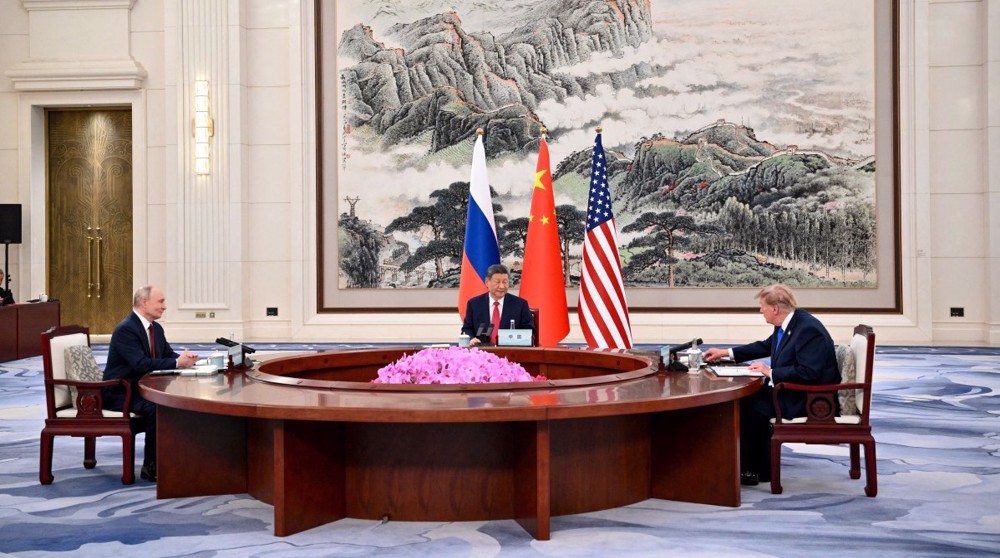
Scheduled for about an hour, the meeting lasted 90 minutes after starting roughly two hours late. The three sat at a large round wooden table under a Chinese landscape painting, their three flags behind them, and made short opening remarks before the cameras left.
Xi spoke first. He called nuclear weapons a "sword of Damocles" hanging over humanity and said the three had agreed on the ultimate goal of a world free of nuclear weapons. "Positive interaction among major powers," he said, "is not a matter of choice, but a mandatory requirement."
Trump spoke last. He said the three were "really making history" and "uniquely positioned" to reduce the world's nuclear weapons, and on Iran: "We not going to let Iran have a nuclear weapon." He closed with: "Let's see if we can get something done." Putin said all three shared an interest in resolving the war in Ukraine.
The statement was limited to pledges. "We recognize the importance of respecting intellectual property rights in the development of digital and emerging technologies," it said. "We will continue our cooperation on facilitating the flow of data across borders, strengthening business and consumer trust in digital transactions, and ensuring data protection and privacy." The statement also appeared to obliquely reference the scandal around Nvidia chief executive Jensen Huang.
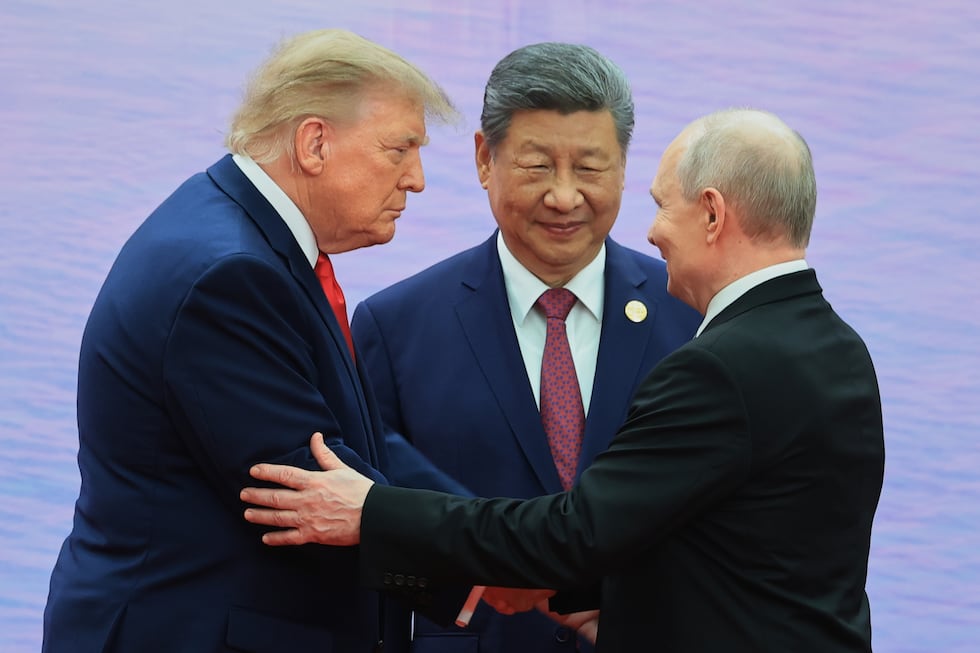
Before the trilateral, Trump held two bilaterals. His meeting with Putin lasted about 40 minutes, unannounced in advance, with Secretary of State Marco Rubio and Treasury Secretary Scott Bessent at his side. Kremlin aide Yuri Ushakov said Ukraine was the main focus and Putin found the talks excellent. Russian media showed Trump greeting Putin: "Who is he? He's my friend!" The meeting with Xi lasted about an hour, then a working lunch — their third substantial meeting this year.
How We Got Here
The summit was confirmed only last week — by the White House on Friday, November 13, and by China's foreign ministry on Monday, November 16. A senior U.S. official had warned beforehand that the talks would not reach "any kind of agreement." New START, the last U.S.–Russia arms control treaty, expired in February, removing caps on the two largest arsenals for the first time in decades.
On trade, the picture is less clear than the headlines suggest. The current U.S.–China truce runs until January 10, 2027, after a two-month extension agreed in September. Le Private Banker, citing the Globe and Mail, CNBC and Bloomberg, reported that the two sides agreed in Shenzhen to extend it further — but its terms and duration have not been disclosed, and no other major outlet had confirmed a new extension as of Thursday evening.
Reactions
Ukraine's foreign minister, Andrii Sybiha, said no decisions can be made without Ukraine. President Volodymyr Zelenskyy had warned the meeting could become a "new Yalta." Australia's prime minister told Putin to end the war; Poland's prime minister posted that the continent needed protection "from such friends."
In Moscow, the meeting was read as vindication. Alexander Dugin, a nationalist believed to have Putin's ear, said the summit "shows who is important in the world: We are, China and the West." Henry Huiyao Wang, a former senior adviser to China's government, said: "The summit is more than symbolic." No official response has been issued yet from Kyiv on the outcome.
Why It Matters
The meeting matters because the format now exists — and because the statement shows its limits. Three nuclear powers sat together for 90 minutes and agreed only on trade and technology pledges. For Putin, the gain was the sitting itself: his first welcome back onto the world stage since the 2022 invasion. For Trump, the image of a peacemaker; for Xi, the host's chair.
What Happens Next
Watch whether any government publishes a fuller readout — and whether the reported trade-truce extension is confirmed, with terms. Trump and Xi expect to meet again in December, at the G20 summit in Florida. With New START gone, every month without caps is a month in which the world's two largest arsenals grow unconstrained.

Loading comments…