
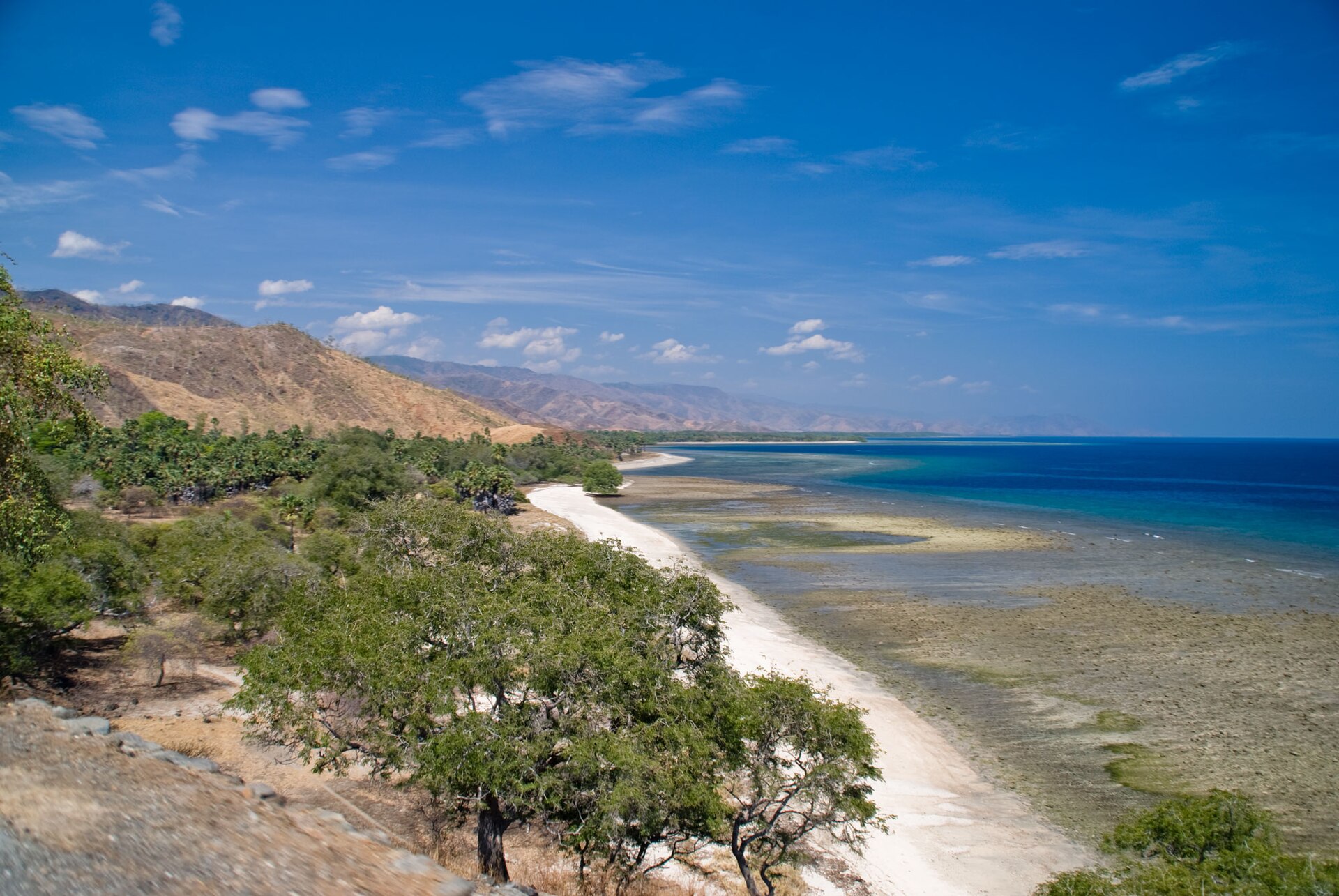
A magnitude 6.8 earthquake struck the Banda Sea near Timor-Leste on Saturday, shaking the capital Dili and towns across the country's east — but triggering no tsunami warning and, so far, no reports of casualties or damage.
The quake hit at 09:42 UTC — 16:42 in Jakarta, 18:42 in Dili — the US Geological Survey said. Its epicentre lay 103 kilometres northeast of Lospalos, in the east of Timor-Leste, at a depth of 143.4 kilometres. Germany's GFZ research centre put the depth at 117 kilometres and the distance from Dili at 226 kilometres.
The Details
The USGS issued a green alert for the event, its lowest level, indicating a low likelihood of casualties or damage. The maximum estimated shaking was intensity V — moderate — on the Modified Mercalli scale, with shaking near Lospalos and Baucau estimated at VI, or strong, and V in Dili, some 234 kilometres from the epicentre.
By the time of publication, 24 people had reported feeling the quake to the USGS. No aftershock of magnitude 4.5 or greater had been recorded within 150 kilometres of the epicentre. No tsunami warning, watch or advisory was issued by the Pacific Tsunami Warning Center or the USGS: at a depth of more than 140 kilometres, the quake did not displace the seafloor enough to generate a hazardous wave.
The epicentre sits in a sparsely populated area of eastern Timor-Leste, near the border with Indonesia, surrounded by rural villages. The nearest town, Lospalos, lies about 103 kilometres to the southwest. Most of the region's critical infrastructure is in Dili, on the north coast, more than 200 kilometres away.
Authorities in Timor-Leste had not reported any damage or casualties by the time of publication, and no damage had been reported from Dili or Lospalos. That picture could change as reports come in from the east of the country, where communications are limited.
How We Got Here
Timor-Leste sits on one of the most restless boundaries on Earth: the collision between the northern margin of Australia and the volcanic Banda Arc, along the Wetar and Timor thrust zones. The quake began in the descending oceanic plate, deep in the upper mantle — the Wadati-Benioff zone, between 70 and 300 kilometres down — where intermediate-depth earthquakes are common.
That depth is the main reason the shaking stayed moderate. An intermediate-depth quake spreads its energy over a wide area, but the shaking at the surface is weaker than from a shallow quake of the same size. The same depth explains why the tremor was felt as far away as Dili, and why no tsunami followed.
The region is no stranger to large quakes. The strongest recent event was a magnitude 7.6 deep shock in the Banda Sea in 2023, and a magnitude 6.2 struck in 2022. USGS data show 29 earthquakes recorded around Dili in the past 30 days, most of them small.
Saturday's quake was also the second major earthquake of the day. Hours earlier, a magnitude 6.7 earthquake struck central Peru, sending residents of Lima into the streets. The two quakes sit on opposite sides of the Pacific Ring of Fire, the horseshoe of faults and volcanoes that produces most of the world's large earthquakes. It was also the largest earthquake recorded anywhere in the world in the past 24 hours.
Why It Matters
A magnitude 6.8 quake is classified as strong, and in a populated area it can be destructive for up to 160 kilometres around the epicentre. Well-built structures generally withstand the shaking, but unreinforced masonry can suffer serious damage. The green alert reflects the combination of great depth, a rural epicentre and distance from the capital.
For Timor-Leste, the test now is assessment: reaching the villages nearest the epicentre, where roads are basic and communications limited, and confirming that the early silence means no damage — not no news.
What Happens Next
Aftershocks remain possible in the coming hours and days, and the USGS may revise its figures as more seismic data arrives. With no tsunami threat, coastal communities face no evacuation. If damage reports emerge from the east of the country, this story will be updated.

Loading comments…