
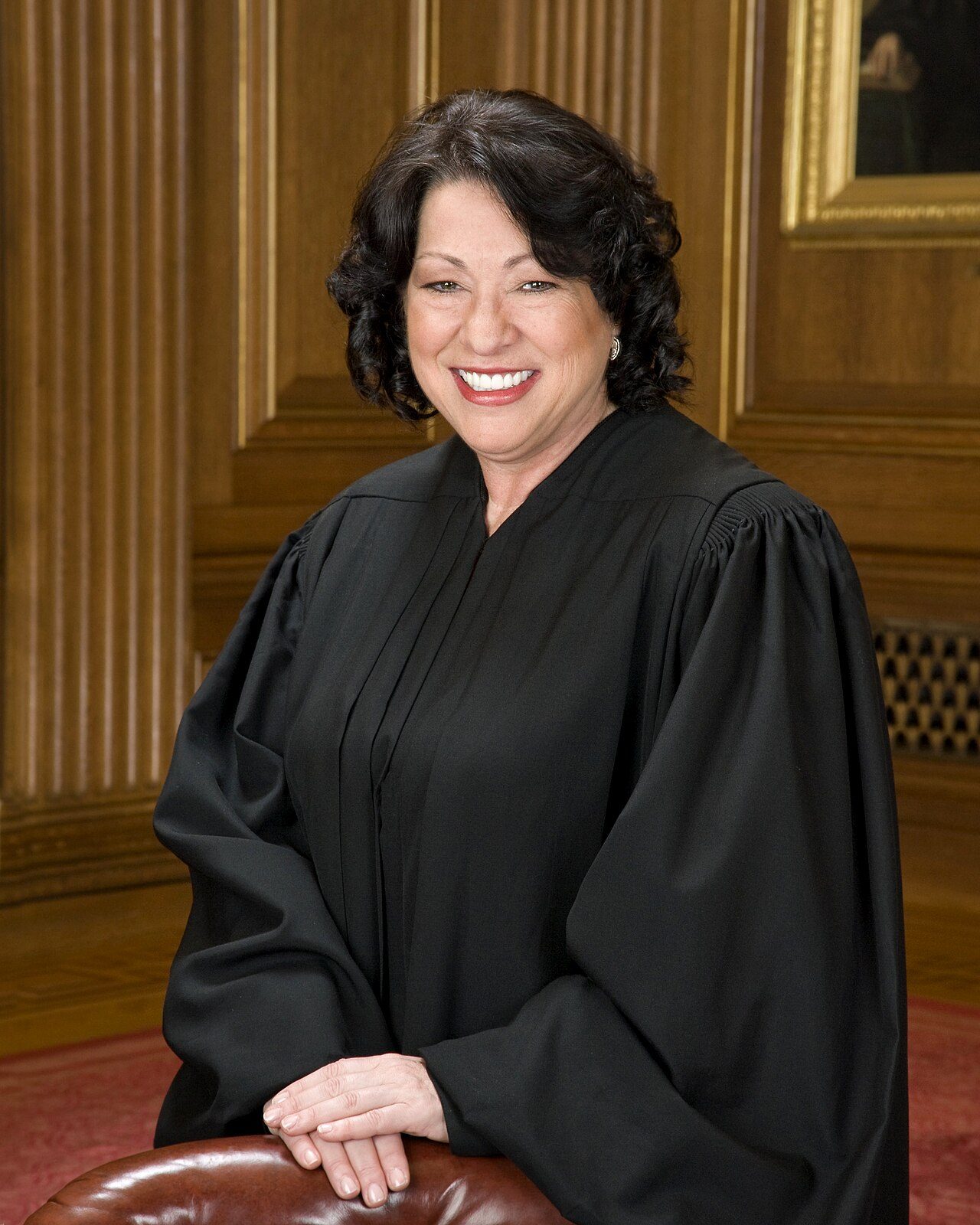
Justice Sonia Sotomayor said Friday she could support term limits for members of the Supreme Court, lending the voice of a sitting justice to an idea that has circulated in Washington for years — and that may gain new momentum when Democrats take control of Congress in January.
"As with everything else in life, I wouldn't be unhappy with term limits," Sotomayor told an audience at the American Philosophical Society in Philadelphia, where she received the Benjamin Franklin Medal. She noted that the United States is the only democracy that gives its judges lifetime appointments, and she put the question to the room: "It's not up to me, it's up to you."
“I wouldn't be unhappy with term limits.”— Justice Sonia Sotomayor, American Philosophical Society, Philadelphia, November 20, 2026
How We Got Here
The debate over the court's structure is not new. Lawmakers, scholars and presidential commissions have debated fixed terms for justices for years, most often in the form of 18-year staggered terms that would give every president two appointments per term. The idea has never come close to becoming law.
What is new is a sitting justice saying it out loud. Sotomayor, the court's senior liberal justice, has served since 2009, and her remarks on Friday went further than her earlier public comments on the subject. In a 2024 appearance at the University of Zurich, she weighed the idea and said term limits would keep the court's ideological balance from being "skewed for too long" — while also warning that a lifetime appointment "can't be taken away constitutionally."
Friday's event was a conversation with retired federal appeals Judge David Tatel, and much of it looked back at the court's recent high-profile decisions, including on birthright citizenship and presidential immunity. Asked whether the court had lost something because most of its justices had taken similar professional paths to the bench, Sotomayor answered bluntly: "For sure. They've forgotten that at the center of every case is people."
Why It Matters
Term limits for justices receive healthy support in public opinion polling, among liberals and conservatives alike. Gabe Roth, who leads the Supreme Court watchdog group Fix the Court, welcomed Sotomayor's remarks, saying that "no one in a democracy should serve for 30 or 35 years, as has become the norm, in a position of such power."
That length of service is the heart of the case for change. Justices now routinely sit for three decades or more, which means a single appointment can shape American law for a generation — and a single vacancy can become a political earthquake. A fixed term would make vacancies regular and predictable, supporters argue, instead of turning every retirement or death into a national crisis.
The other side of the argument is just as firmly held. Many Republicans view any change to the Supreme Court's structure as an effort to undermine the judiciary's independence. Justice Samuel Alito has repeatedly stressed the importance of an independent judiciary since the election, without engaging directly with specific proposals. Even with Democratic control of Congress next year, it is unlikely such a measure would clear the Senate or win support from President Donald Trump.
What Happens Next
The biggest obstacle may not be political at all, but constitutional. It is far from clear whether Congress could impose term limits by passing a law, or whether the change would require a constitutional amendment — a far harder path that needs two-thirds of Congress and three-quarters of the states.
Sotomayor herself has flagged the difficulty. In her 2024 remarks she argued that a lifetime appointment is a promise that cannot be taken away retroactively, "because you cannot have a retroactive law changing something that you've earned." Under that reading, term limits might apply only to future justices, leaving the current court untouched — and the reformers without the change they most want.
No bill to impose term limits has been introduced in the current Congress, and the White House had not publicly responded to Sotomayor's remarks as of Saturday morning. The debate is expected to pick up in January, when Democrats take both chambers. For now, the idea remains exactly what Sotomayor called it in Philadelphia — "being kicked around very actively" — with one difference: a sitting justice is now on the record as open to it, and the Constitution stands as the largest obstacle in its way.
© 2026 Capitol Wire Daily. All rights reserved. Capitol Wire Daily reports facts from official statements and verified reporting; developing stories are labeled as such.


Loading comments…