
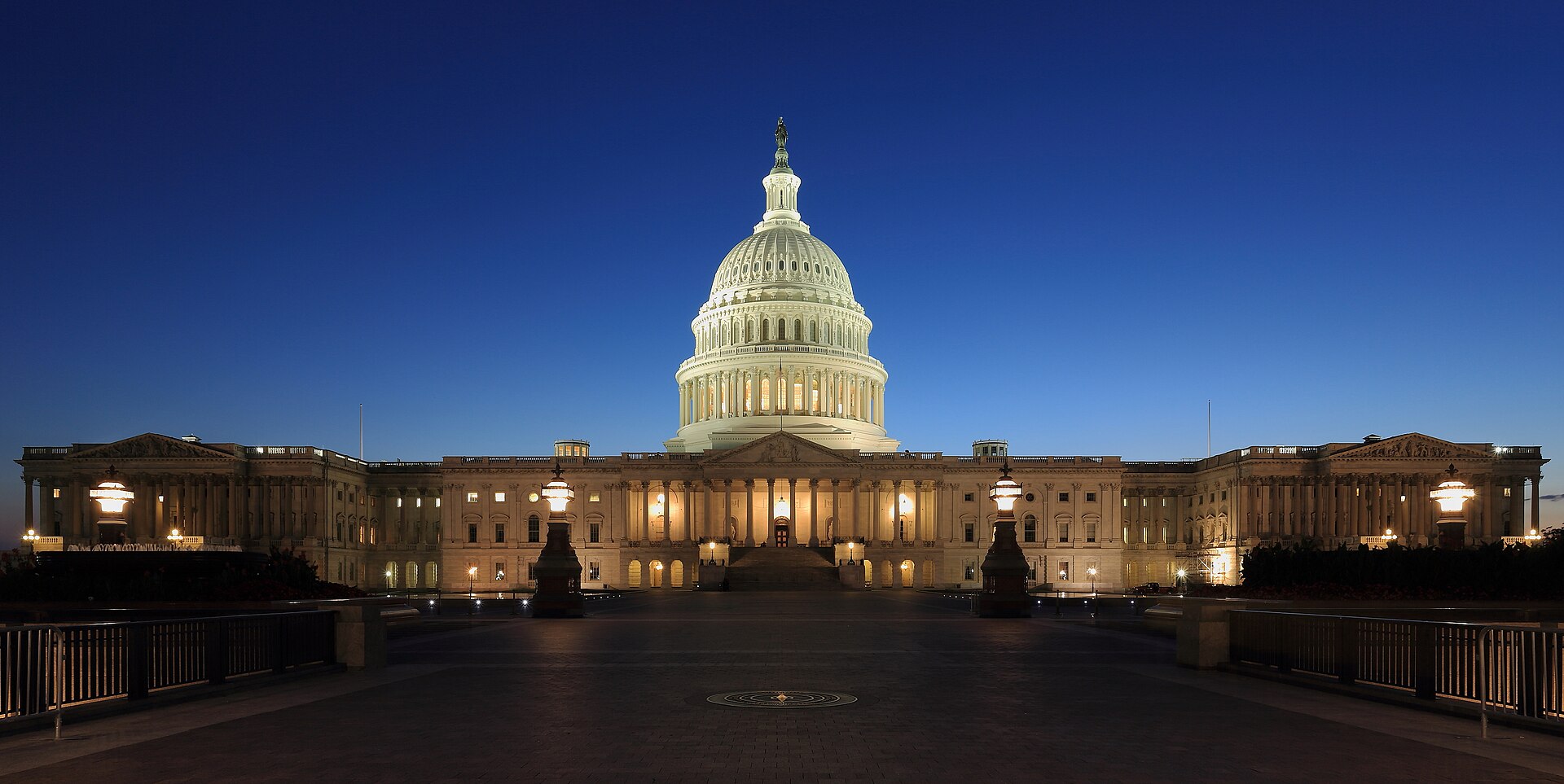
A federal appeals court ruled on Friday that the House unconstitutionally passed a $1.7 trillion government spending bill in 2022, because more than half the lawmakers who voted for it were not in the building.
The U.S. Court of Appeals for the 5th Circuit, based in New Orleans, voted 9-8 to uphold an injunction blocking enforcement of part of the bill in Texas. The decision strikes at the pandemic-era proxy voting system that let House members have colleagues cast their votes for them — a practice the court said violates the Constitution's requirement that a majority of lawmakers be physically present.
“While the chambers of the legislature have much discretion regarding their rules of procedure, the Quorum Clause's constraints on congressional power cannot be circumvented by congressional fiat.”— Judge Cory T. Wilson
"While the chambers of the legislature have much discretion regarding their rules of procedure, the Quorum Clause's constraints on congressional power cannot be circumvented by congressional fiat," wrote Circuit Judge Cory Wilson, an appointee of President Donald Trump.
The Details
The case turns on a single vote, taken days before Christmas in 2022. The House passed the fiscal 2023 omnibus spending bill by 225 to 201, with one member voting present — and 226 lawmakers casting their votes by proxy.
The majority held that those proxy votes could not count toward a quorum. "We further conclude that the Act's passage was unconstitutional because the Quorum Clause does not allow proxies to be included when establishing a quorum," Wilson wrote. "Members of Congress must be present for quorum purposes — as the Supreme Court expressly held over 125 years ago, and as Congress has done ever since the Founding. 'Proxy presence' does not count."
The court also found that the government had not established there was an "existence of an emergency" when it adopted proxy voting.
The lawsuit was brought in 2023 by Texas Attorney General Ken Paxton, who recently lost his bid for the U.S. Senate, to block the Pregnant Workers Fairness Act in Texas. The law requires employers to provide reasonable accommodations to pregnant workers, including access to water, more bathroom breaks and restrictions on heavy lifting.
The relief the court granted is narrow. The opinion stressed that the ruling has a "narrow scope," applying only to enforcement of the Texas law: it bars the Justice Department and the Equal Employment Opportunity Commission from enforcing the pregnant workers provision against Texas. The rest of the $1.7 trillion bill — which funded government operations, roughly $45 billion in aid to Ukraine and NATO allies, and around $40 billion for disaster relief — is not erased by the decision.
How We Got Here
Proxy voting was introduced by then-Speaker Nancy Pelosi in May 2020 as a pandemic emergency measure: a member could name a colleague to cast a vote after attesting that a health emergency blocked travel to Washington. The rule was dropped when Republicans took the House after the November 2022 elections.
The dissent was blunt. Judge James Graves Jr., an appointee of former President Barack Obama, called the ruling "illogical, inexplicable, and invalid," arguing that the majority read a physical-presence requirement into the Quorum Clause that does not exist.
"Even though less than a majority was physically present at the time of the vote, no Member objected that a quorum was lacking," Graves wrote.
Why It Matters
The ruling's practical effect is confined to Texas for now, but its reasoning reaches further: legal experts warned it could open challenges against other bills passed with proxy votes during the Biden administration.
Workers' advocates say the danger is immediate for pregnant workers in the 5th Circuit states — Texas, Louisiana and Mississippi. Inimai Chettiar, president of A Better Balance, which worked with lawmakers on the provision, said the implications may be broader than the Texas case alone.
"If a worker was to try to get accommodations now in any of these states and an employer was going to deny the accommodation and then the worker sued, a district court judge in any of those states would point to this opinion," Chettiar said, calling the decision "incredibly harmful" because it reaches beyond the case's facts.
What Happens Next
The decision is almost certain to be appealed, and the losing side could ask the Supreme Court to weigh in on whether the Constitution requires lawmakers to be physically present for a quorum. Until then, the proxy voting system that carried some of the pandemic era's most consequential legislation has been declared unconstitutional — by a single vote.



Loading comments…