
NATO will deploy an AWACS early-warning aircraft to Poland after prosecutors confirmed all three objects that fell on Polish soil on Friday were Russian Kh-101 cruise missiles.
The North Atlantic Council, the alliance's main political body, met in Brussels on Monday at Poland's request. Deputy Defence Minister Pawel Zalewski said after the meeting that the surveillance aircraft would be made available, and a NATO spokesperson confirmed Gen. Alexus Grynkewich, NATO's top commander, had authorized the deployment.
“An AWACS early-warning aircraft will be made available to Poland.”— Pawel Zalewski, Polish Deputy Defence Minister
The finding corrects the first account, which described two missiles and a jet-powered drone. No one was hurt, and no critical infrastructure was damaged.
The Details
"An AWACS early-warning aircraft will be made available to Poland," Zalewski told reporters after the NATO meeting in Brussels. "This is a very good system that gives us even deeper operational awareness which allows us to respond better to this kind of threat."
NATO's 14 Airborne Warning and Control System aircraft, with their distinctive nine-metre-wide radar domes, have served as the alliance's eyes in the sky since 1982. Based at Geilenkirchen air base in Germany, the fleet has played an important role in surveillance along NATO's eastern flank since Russia's full-scale invasion of Ukraine in 2022.
Grynkewich is examining further deployments, and Poland has asked for more allied aircraft under Operation Eastern Sentry — set up in September 2025 after Russian drones previously entered Polish airspace — including F-35 fighters and faster rules of engagement.
Poland has not formally invoked Article 4, the consultation mechanism allies use when a member's security is under threat. No joint communique was expected, and no outcome statement had been published as of publication.
How We Got Here
Polish air defences picked up the first warnings at about 1:40 a.m. on Friday, as Russia attacked Ukraine overnight. Polish F-16s and Swedish Gripens patrolled, Patriots were activated at about 3:30 a.m., and two NATO AWACS aircraft flew over Poland. Zelenskyy said Russia fired more than 400 drones and 110 missiles at Ukraine.
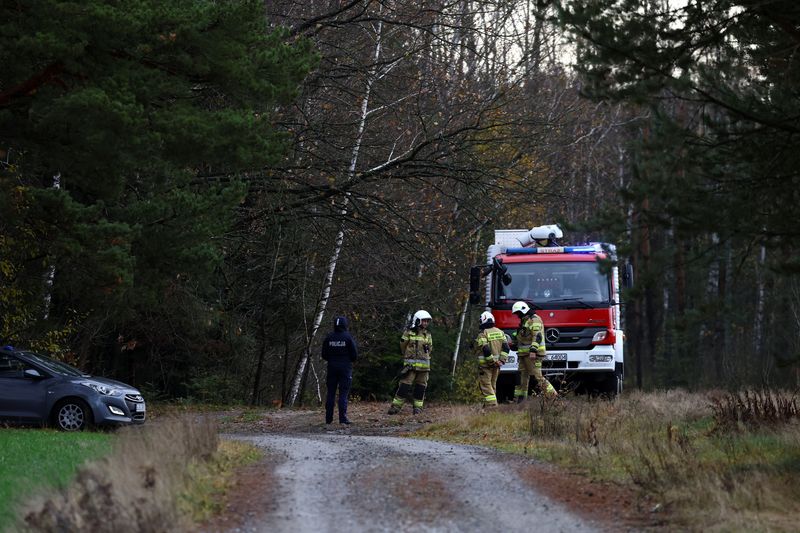
Eleven objects were detected near the border; three crossed it. A Kh-101 came down at Nowy Lipowiec about 6:30 a.m., a second missile fell near Rudnik nad Sanem, and a third object came down at Molodycz. Prosecutors later recovered the Kh-101's engine near Nowy Lipowiec and confirmed the missile was manufactured in the fourth quarter of 2026.
A Swedish Gripen pilot had conditional authorisation from NATO's Combined Air Operations Centre at Uedem to shoot down the suspected Kh-101, but could not positively identify the target in severe weather and withheld fire.
Rutte travelled to Warsaw on Saturday, a day after the incident, and guaranteed the alliance would defend Polish territory. "I can guarantee that NATO will defend every inch of Polish territory," he told Poland's PAP news agency.
Prime Minister Donald Tusk called the incursion an intentional provocation: "This doesn't look like an accident," he said. President Donald Trump, by contrast, has suggested it was likely a mistake.
Why It Matters
The confirmation that three cruise missiles — not two missiles and a drone — landed on NATO territory sharpens the question the alliance has faced since Russia's invasion: how to stop the war in Ukraine spilling across its borders.
Rutte called the incursion a "dangerous incident" on Monday, speaking at the NATO Parliamentary Assembly in Berlin, and declined to speculate on whether it was deliberate. The Institute for the Study of War assessed that Russia deliberately violated Polish airspace to test NATO's response. Russia has made no public comment on the three objects.
German Chancellor Friedrich Merz, alongside Rutte, accused Russia of "dangerous provocations" and called reports of a planned nuclear-capable satellite launch "shocking."
The rules of engagement are now part of the debate: a NATO pilot had authorisation to fire on Friday and did not, because the target could not be positively identified in bad weather. Poland is asking for faster rules of engagement alongside the extra aircraft.
What Happens Next
No date has been given for the AWACS deployment, and Grynkewich's review of further deployments is continuing. Rutte had been expected to present the results of Monday's talks, but no outcome statement had been published as of publication.
Poland's requests — more fighters, more surveillance aircraft, and faster rules of engagement — remain on the table. The investigation continues, with American officials having access to the wreckage.
For now, the alliance's answer is measured: more eyes in the sky, no formal consultation triggered, and no public answer yet on whether Russia meant to cross the border.




Loading comments…