
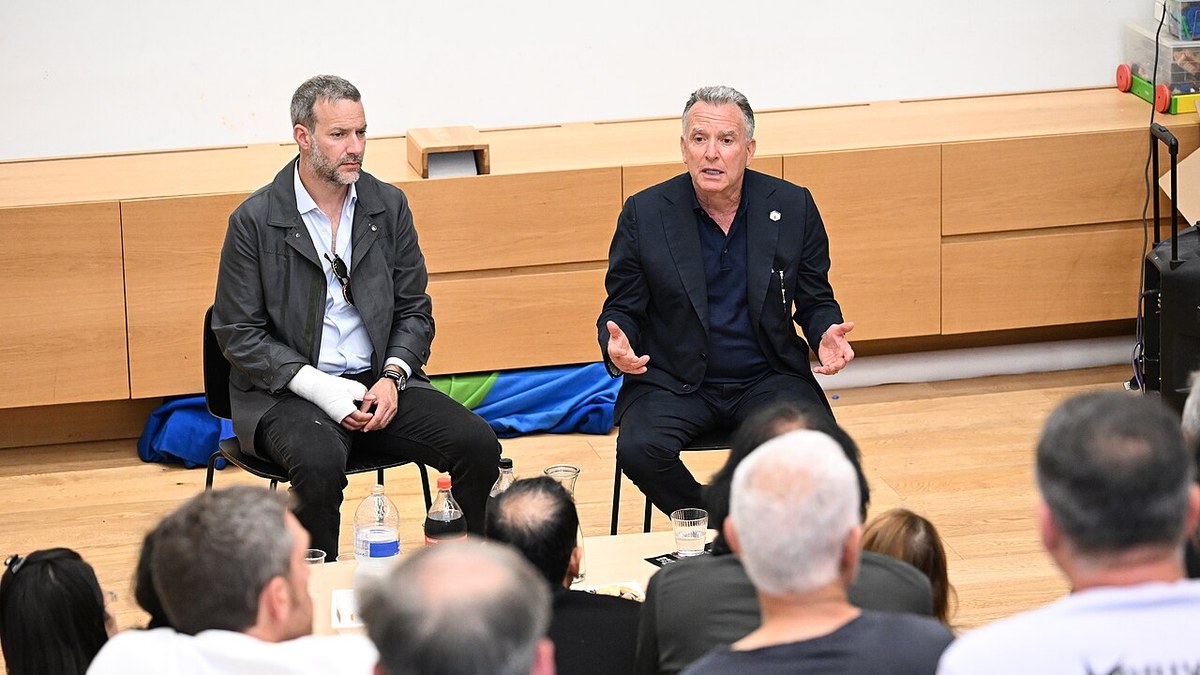
President Donald Trump said on Friday that Iran wants a deal with the United States — but not one he is willing to accept — as his envoys met Qatari mediators in Berlin and his Treasury chief said Tehran has no oil on the water.
"They want to make a deal, but they don't want to make a deal that's acceptable to me," Trump told reporters at a White House news conference. He demanded a "real deal" and accused Tehran of "bullshitting people for 51 years."
“For the first time in the history since Iran has started producing oil, they have no oil on the water.”— Treasury Secretary Scott Bessent, CNBC interview
The Details
The remarks followed a meeting on Thursday in Berlin between Special Envoy Steve Witkoff, Jared Kushner, Qatari Prime Minister Mohammed bin Abdulrahman Al Thani and Qatari envoy Ali al-Thawadi, Axios reported, citing two sources. Qatar has spent weeks trying to broker a deal to restore the ceasefire, restart nuclear negotiations and avert another war.
The Berlin meeting followed a series of contacts, including a visit to Washington last week by the Qatari prime minister, who met Trump and Vice President JD Vance. Al-Thawadi also met Iranian Foreign Minister Abbas Araghchi in Turkey a week ago, and an Iranian technical delegation travelled to Doha earlier this week.
Despite the activity, the talks have yielded no significant progress, sources familiar with the negotiations said. Trump indicated on Thursday he was in no rush, suggesting further military action could wait until after the new year. He said the same to Fox News and Axios.
Treasury Secretary Scott Bessent said on Friday that Iran has no crude oil at sea for international buyers. "For the first time in the history since Iran has started producing oil, they have no oil on the water," Bessent said in an interview with CNBC. "What we've seen is the world can live without Iranian crude."
Bessent called Operation Economic Outcast, now two and a half months old, the most extensive campaign of economic isolation against any country in history. He also said Hormuz oil shipments were at their highest since the conflict began. Trump said on Friday that American forces had established control over the Strait of Hormuz. And on Friday, the Treasury Department sanctioned four Iranians accused of helping sell Iranian oil, move its proceeds or support Mahan Air.
Araghchi said in an interview published on Saturday that Tehran could shorten the timetable for reopening the Strait of Hormuz from two days to one day or even two hours — but Iran's demands must still be met. Under the proposal, the United States would carry out its commitments on day one, Iran would reopen the strait on day two, and negotiations on a final agreement would begin. Qatar and Pakistan were still carrying messages between Iran and the United States, Araghchi said.
How We Got Here
The United States and Iran have been at war since February 28, when American strikes began. Washington has kept up a naval blockade of Iran's oil exports. Iran has answered with attacks on Hormuz shipping and threats against Gulf oil facilities.
The blockade was first imposed on April 13, lifted in June and reinstated on July 14. On November 18, US Central Command expanded it to cover ship-to-ship transfers. On November 17, the sanctioned tanker Olym transferred about 200,000 barrels of crude to the tanker Hao Fan south of Kharg Island — the first confirmed transfer since the blockade tightened. Iran has since assembled more than 14 tankers off Kharg Island, but trackers say none has sailed.
Prime Minister Benjamin Netanyahu has pressed Washington to consider additional strikes against Iranian military and nuclear infrastructure, and Israel's ambassador has said Israel believes ousting the Tehran regime is "now the only long- or even medium-term answer." Trump said he would wait until 2027 to decide his next move.
Why It Matters
The Berlin talks show channels are open, but the economic campaign makes Tehran's position worse every week, and Bessent's "no oil on the water" claim means Iran's main revenue source is cut off.
For Trump, the question is whether the pressure produces a deal he can accept — or whether Netanyahu's push for another air campaign wins. For Iran, the question is whether the tanker convoy threat is real, or whether the loaded tankers off Kharg Island are a bluff. Trackers say they are still sitting still.
What Happens Next
Watch whether the Berlin channel produces a second meeting, and whether Araghchi's Hormuz proposal gets an American answer. Watch too whether any tanker leaves Kharg Island — and whether Treasury's sanctions widen to the buyers of Iranian oil.

Loading comments…