
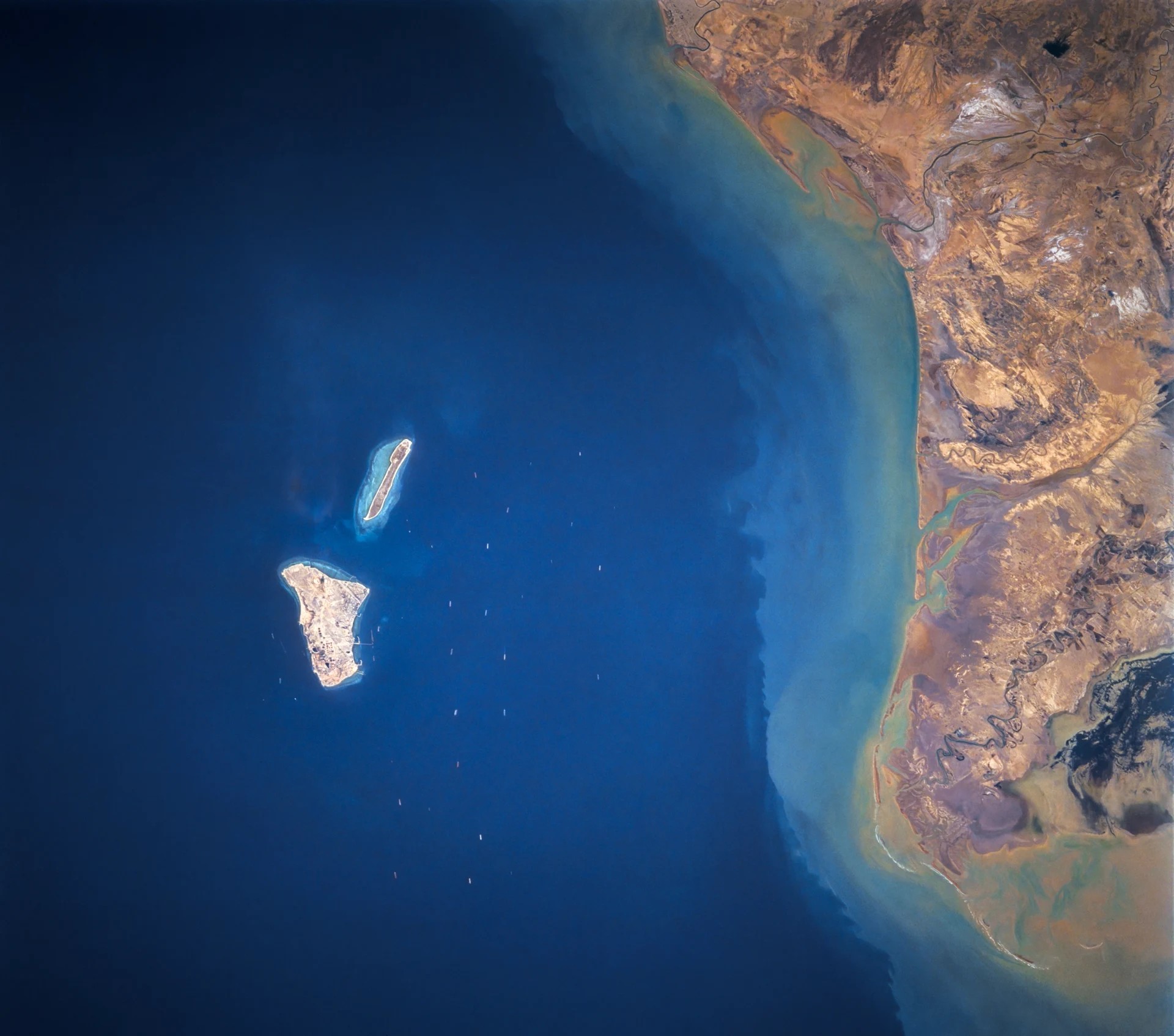
Iran has assembled more than 14 oil tankers at Kharg Island for a run at the American naval blockade of its oil exports — and completed the first ship-to-ship transfer of Iranian crude in months, according to satellite imagery and ship-tracking data cited by Bloomberg and Euronews.
The convoy has not sailed yet. Iranian state media say the loaded, crewed tankers will head for the Sea of Oman in the coming days, with armed escorts, and warn that any attack will be met with strikes on oil terminals across the Gulf. But the ship-tracking firm TankerTrackers has pushed back on the convoy reports, calling them "wishful thinking."
“We are making every effort regarding oil exports and negotiations. The blockade must be broken.”— Abbas Araghchi, Iran's Foreign Minister
The Details
The transfer happened on November 17, south of Kharg Island. The sanctioned Suezmax tanker Olym pulled alongside the medium-range tanker Hao Fan and offloaded about 200,000 barrels of Iranian crude, according to Bloomberg, citing ship-tracking data and United Against Nuclear Iran. Both ships had their automatic identification systems switched off. The Hao Fan, which is not on the US sanctions list, was spoofing its position to appear near Oman while it was actually south of Kharg.
It was the first confirmed ship-to-ship transfer of Iranian crude since the United States reimposed its naval blockade in mid-July. US Central Command responded on November 18 by expanding the blockade: any vessel receiving cargo from a blockaded ship in a transfer at sea will itself be treated as evading the blockade — and may be stopped, boarded, diverted or captured, including through the use of force.
The convoy now staged at Kharg is the test of that warning. The terminal handles 85 to 90 percent of Iran's crude exports and stores roughly 30 million barrels. Iranian officials say the tankers have crews aboard and Iranian flags raised. Tehran has threatened that disrupting the exports would bring attacks on oil facilities in the United Arab Emirates, Saudi Arabia, Qatar, Kuwait, Oman and Bahrain.
Iran's Foreign Minister, Abbas Araghchi, said on Friday: "We are making every effort regarding oil exports and negotiations. The blockade must be broken."
How We Got Here
The blockade has squeezed Iran's oil trade to a near halt. October was the second month in a row with no loadings at all, according to Kpler data cited by Reuters. When the war began on February 28, Iran was loading about 2 million barrels of crude and condensate a day.
The pressure has been met with attacks at sea. On November 19, Iran's Revolutionary Guard Navy said three commercial oil tankers struck sea mines in the eastern Strait of Hormuz. The UK Maritime Trade Operations centre has confirmed multiple attacks on shipping this week, and reports say at least two seafarers are missing. On Wednesday, Iran widened its attacks across the Gulf — firing drones at a US air base in Kuwait and striking Bahrain for the third time in a week — hours after American jets hit a Revolutionary Guard missile site on Qeshm Island.
The United States has also tightened the blockade itself. The November 18 advisory closes the ship-to-ship loophole that made the Olym–Hao Fan exchange possible.
Why It Matters
The convoy is a deliberate stress test of American enforcement. If the tankers sail and reach open water, Iran will have broken a blockade that has cost it months of oil revenue. If they are stopped or boarded, the confrontation could widen — and Tehran has already named the targets it would hit in retaliation.
The other side is the shipping industry and the Gulf states, which have the most to lose from a wider war at sea. Commercial tanker movements through the strait have already fallen sharply, with crude transits down by half in three weeks, according to Kpler. US Energy Secretary Chris Wright said on Thursday that energy flows through the strait were increasing despite the tensions — a claim at odds with the shipping data.
The scepticism matters too. TankerTrackers' pushback is a reminder that the convoy story began with Iran's own state media, and that the tankers have not yet moved. The transfer, the blockade expansion and the minister's words are confirmed — the convoy itself is not.
What Happens Next
Watch whether the tankers leave Kharg in the coming days — and whether American naval forces move to stop them. Watch too for the next round of ship-tracking data, which will show whether the convoy is real or a bluff. And watch the negotiations: Araghchi's line suggests Tehran still wants a deal, even as it prepares to test the blockade.

Loading comments…