
The Federal Communications Commission voted on Thursday to let state and local prisons jam contraband cellphones for the first time — ending a federal ban that has stood since 1934. The rules are voluntary: no prison has to jam, but any that wants to may now apply to do it.
The Commission adopted the final rules at its November 19 open meeting, its official release says. The order covers state prisons and local jails; until now, only federal prisons could block signals inside their walls.
“We're taking an aggressive, but responsible approach to empower those on the front lines.”— Brendan Carr, FCC Chairman
The Details
The legal trick is a redefinition. Section 333 of the Communications Act of 1934 bans wilful interference with authorised radio stations — and for nine decades that has barred state prisons from jamming. The new order "deauthorises" devices that are contraband under law or a prison's own rules. A smuggled phone, the FCC reasons, is not an authorised station — so jamming it does not break the ban. That covers ordinary commercial bands and FirstNet, the first responders' network, so inmates cannot switch to a gap in the spectrum. Jamming is permitted only inside a Commission-authorised "jamming containment area" and must not cause harmful interference outside it.
The safeguards are detailed. A facility must first run a one-time proof-of-concept test under an experimental licence, then pass pre-operational testing before switching jamming on. It must certify the system every year, monitor the network continuously, and stop jamming while any credible complaint of harmful interference is resolved. Carriers, FirstNet, public safety coordinators and 911 authorities get advance notice of testing, and nearby communities are notified before deployment. A further rulemaking will consider unlicensed spectrum, satellite links and "quiet zones" around prisons.
How We Got Here
The scale of the problem is the FCC's own case for acting. Prison authorities recovered more than 25,000 contraband phones in a single year, according to 2024 figures cited by the Commission, and two facilities each recovered more than 6,000. A September 2024 estimate put the total at roughly 500,000 smuggled phones circulating in American prisons and jails.
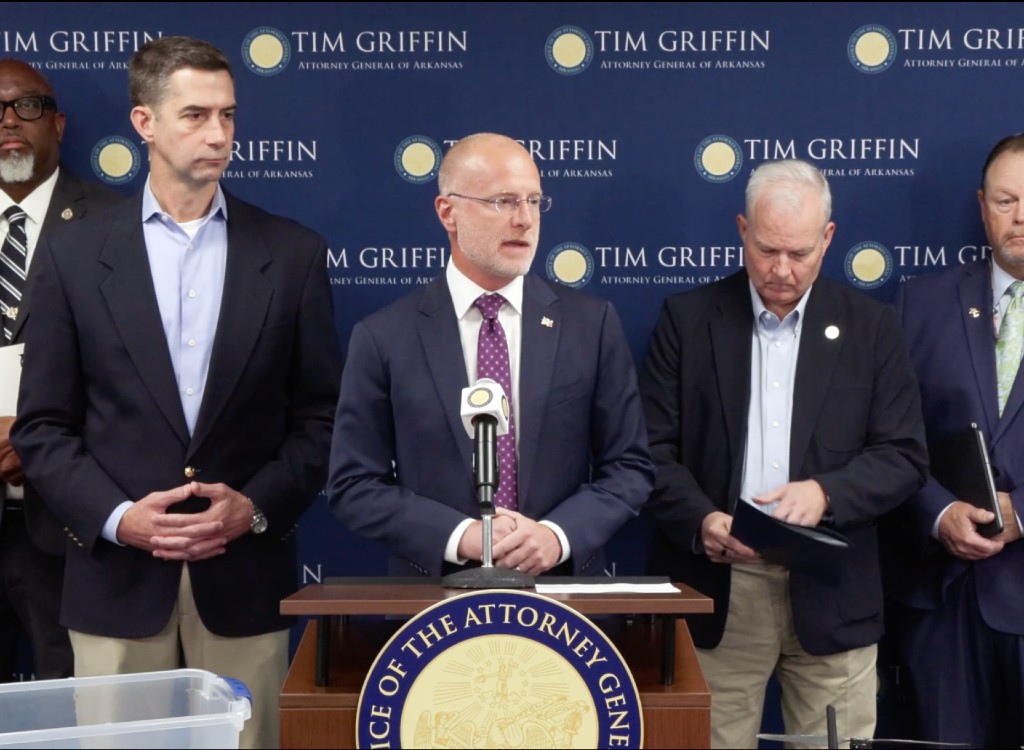
Chairman Brendan Carr announced the vote on October 28 in Little Rock, Arkansas, alongside Senator Tom Cotton and state Attorney General Tim Griffin. On November 18 Carr said the Commission had the votes to approve the final rule. South Carolina's corrections director, Joel Anderson, has said he wants jamming at all 21 of the state's prisons.
Why It Matters
For prison officials, this is a tool they have sought for more than a decade. Smuggled phones let inmates order hits, run drug operations, threaten witnesses and coordinate gang activity from their cells. Carr points to Captain Robert Johnson, a South Carolina officer shot six times at his home in 2010 on an inmate's orders, and to inmates using the devices to target young girls. Carr put it bluntly: "While the FCC has authorized a range of solutions in the past, it has stopped short of allowing jamming. That ends today."
The change is not uncontested. Commissioner Anna Gomez, the Commission's lone Democrat, backed the proposal when it was first put out for comment in September 2025 — but warned then of "the potential unintended consequences of permitting jamming by non-federal actors" and asked the agency to start with a pilot programme. Critics outside the Commission go further: the Benton Institute wrote this month that "no evidence shows that blanket jamming reduces crime," and Public Knowledge has argued the order stretches the Communications Act to "create a loophole — just for correctional facilities." The risk they point to is concrete: a jammer that leaks beyond prison walls could silence a neighbour's phone — or a 911 call. Carr himself concedes the limits: "This isn't going to be a silver bullet," he said — jamming will not be feasible, or the right answer, for every facility.
What Happens Next
The order takes effect once published, and the first test will be who applies. South Carolina is first in line, and other states that pushed for the change — Georgia and Arkansas among them — are expected to follow. Each application will have to survive the FCC's testing regime before a single jammer is switched on.
Congress may yet lock the change into law: Senator Cotton and Representative David Kustoff have introduced the Cellphone Jamming Reform Act. And the Commission's further rulemaking — on unlicensed spectrum, satellite links and quiet zones — will decide how far the permission reaches. For now, after 92 years, the ban is gone.




Loading comments…