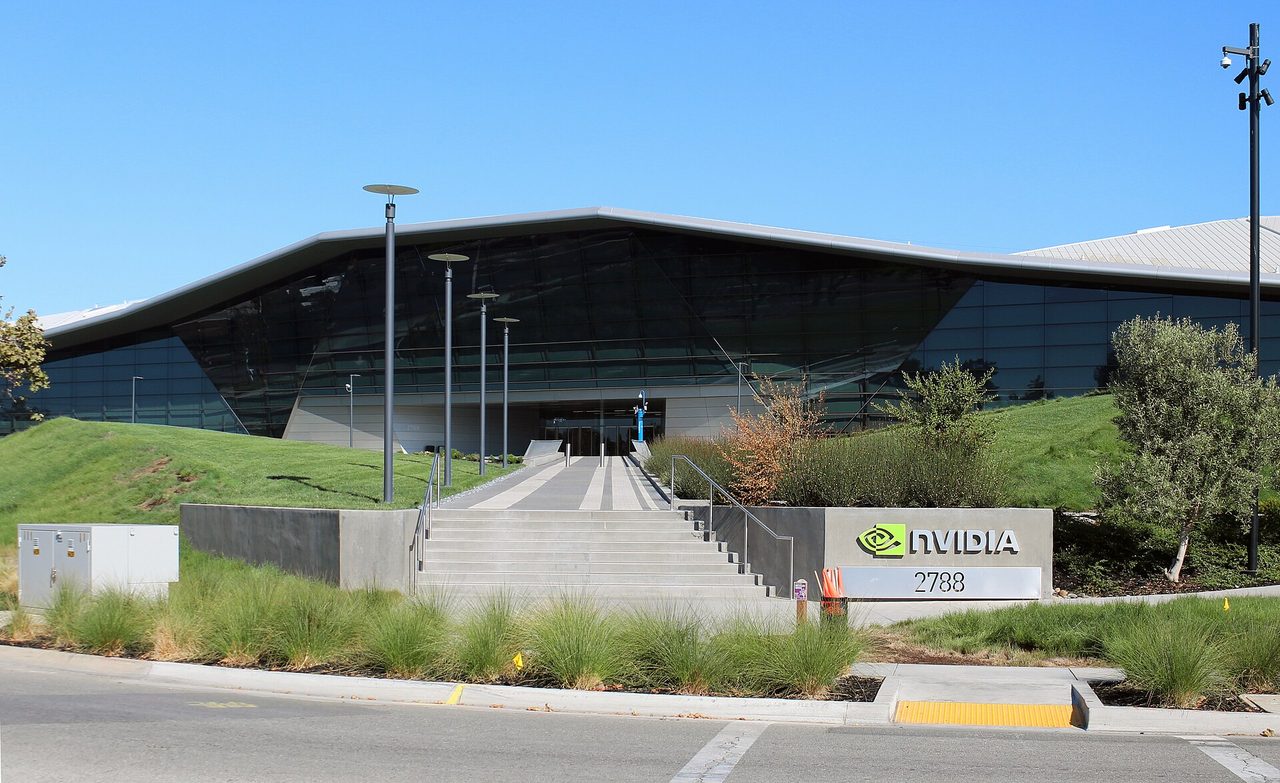
Nvidia used this week's SC26 supercomputing conference in St. Louis to preview Rubin HPC, a processor with more than 50,000 CUDA cores designed for the world's largest scientific supercomputers, due in 2028.
The company also released Nemotron for Science — an open model family and a chemistry benchmark dataset of roughly 50,000 questions — free for any researcher, and detailed a quantum-computing codesign platform it is building with IBM and Fermilab.
Built for laboratories
Rubin HPC succeeds the Grace Hopper and Grace Blackwell chips that power many of today's top supercomputers. A companion Vera CPU rack with 192 processors is due in early 2027, ahead of the new GPU.
The science release is open to anyone. Nemotron for Science pairs a multimodal model, Nemotron 3.5 Super VL, tuned on materials-science and chemistry data, with LitmusBench v0.2 — a public dataset of roughly 50,000 chemistry questions spanning 35 subfields, meant to measure how well AI models actually reason about chemistry.
“HPC and AI are converging into a single computing fabric — and scientific discovery is the killer app.”— Ian Buck, Nvidia's vice president of HPC, in the SC26 keynote
"HPC is now the foundation of AI," Buck said in the keynote, arguing that the same machines that simulate physics and chemistry now train the models built on top of them.
A 13,000-fold speedup, with an asterisk
Nvidia's most striking number came from a scheduling decoder, TCBP-JOBS, which it says solves optimization problems up to 13,000 times faster — in one example cutting a 12-week job to 45 minutes. As with most vendor benchmarks, the figure is Nvidia's own and compares against a general-purpose baseline.
The quantum platform pairs Nvidia's DGX B200 systems with IBM's Quantum Nighthawk processor, aiming to catch and correct the errors that make today's quantum machines unreliable.
What Happens Next
Rubin HPC does not ship until 2028, so the near-term test is adoption: whether national laboratories build their next machines around Nvidia's full stack — chips, CPUs and now science models — or spread their bets across rivals.



Loading comments…