
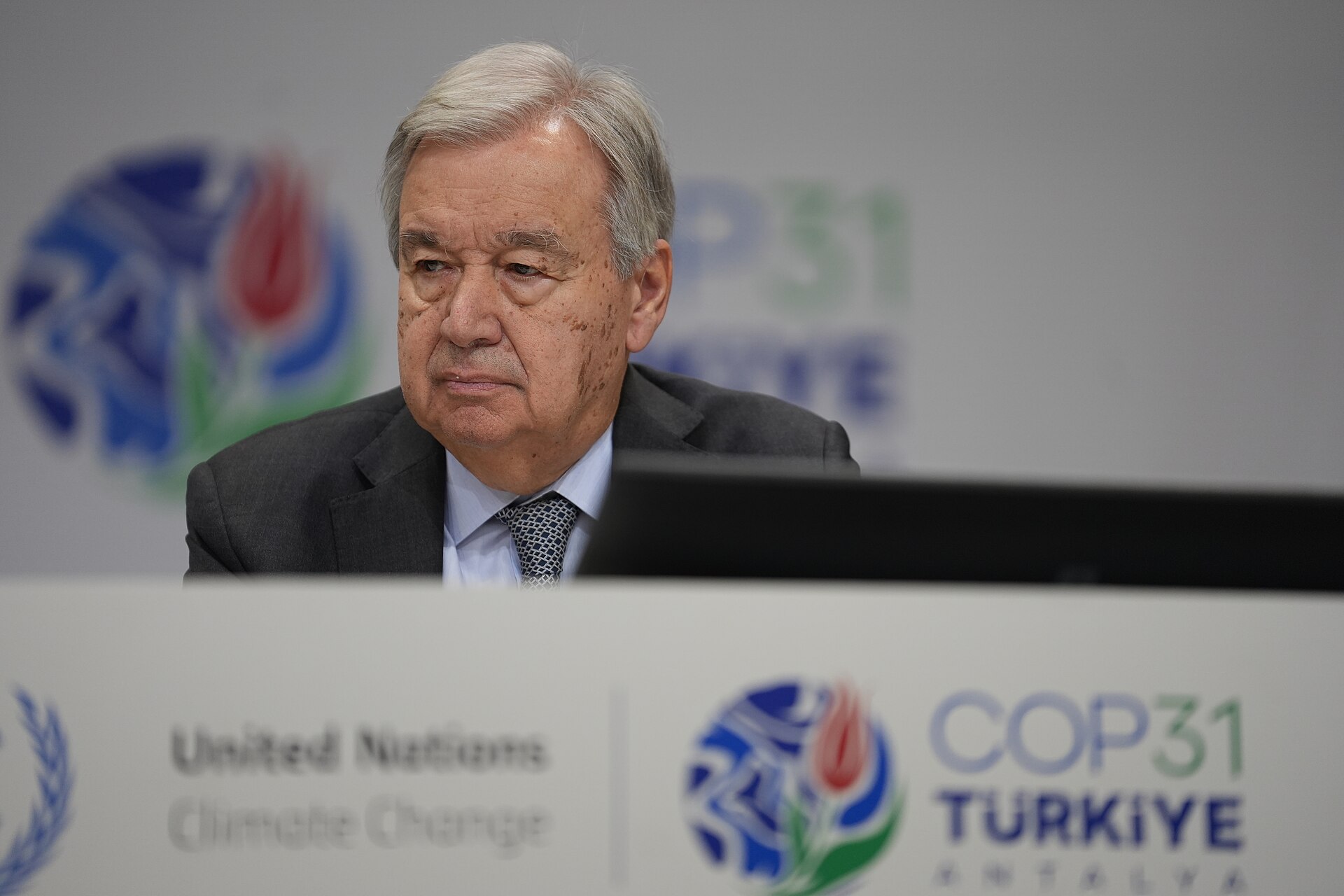
Climate talks in Antalya, Turkey, approached a final deal on Sunday with the announcement of a new package that the COP31 presidents hope will achieve consensus on how to advance the fight against global warming.
"We believe that we have put forward a text which all the parties can agree upon," COP31 President Murat Kurum told a late-night plenary session. He said the conference would reconvene later on Sunday morning to approve the deal.
“We believe that we have put forward a text which all the parties can agree upon.”— COP31 President Murat Kurum, at a late-night plenary session
The Details
Negotiators ran past a Friday deadline, straight through Saturday and into the early hours of Sunday. Their new version of the deal text refined an earlier draft, which had been heavily criticised by some for lacking ambition because it contained no reference to ending the use of fossil fuels.
Kurum said he believed concerns around fossil fuels had been addressed, as had those around helping developing countries finance their adaptations to climate change. The new text followed intensive consultations between Australia, which is leading the talks, Turkey, which is hosting the meeting, and nearly 200 delegations from many of the world's richest, poorest, largest and smallest nations.
Delegations have until 0300 GMT to raise any objections to the deal, with a session scheduled at 0600 GMT to begin approving it. That is 13:00 in Jakarta, and 10:00 in Antalya.
How We Got Here
The summit was scheduled to end on Friday, November 20. Instead, the closing plenary was suspended at 10:29 p.m. local time with the biggest questions still unresolved, and talks resumed on Saturday with crews already boxing up the venue around the negotiators.
The central dispute was over words that were missing. The latest draft of the final agreement contained no reference to fossil fuels at all. An earlier draft had called for accelerating the phase-out of coal, oil and gas, but a slimmed-down version published on Thursday stripped out every mention of ending fossil fuel use, following objections from Saudi Arabia and other major oil and gas producers.
A group of about a dozen countries, including France, Panama and Côte d'Ivoire, formally demanded that the final decision include a phrase calling for a "clear transition away from fossil fuels". Panama threatened to block a deal without it. The draft also dropped a $120 billion target for adaptation finance, and placed a big bet on carbon capture technology, which several delegations criticised as expensive and unproven at scale.
Why It Matters
This year's COP is the first since the UN's environmental body confirmed that the rise in global temperature was set to blow past 1.5 degrees Celsius, a threshold all countries agreed over a decade ago to try not to exceed, and beyond which extreme weather impacts intensify. A summit that ends without a decision document — the first since COP6 in The Hague in 2000, observers warned — would be a stark signal about the state of global climate cooperation.
The draft does set out one big energy goal: raising the share of electricity in total global energy consumption from roughly 21 percent today to 35 percent by 2035. It also backs efforts to "at least triple adaptation finance by 2035", though it does not name a specific dollar target. Whether the new package restores any fossil-fuel language, and whether the countries that demanded it accept the compromise, will decide whether Antalya is remembered as a breakthrough or a breakdown.
What Happens Next
Delegations have until 0300 GMT on Sunday to lodge objections, and the approval session begins at 0600 GMT. If the package survives, COP31 will close with a deal its presidents say every country can accept. If objections pile up, the talks could stretch further into Sunday — or collapse into the first COP in a quarter-century to end with no agreement at all.

Loading comments…