
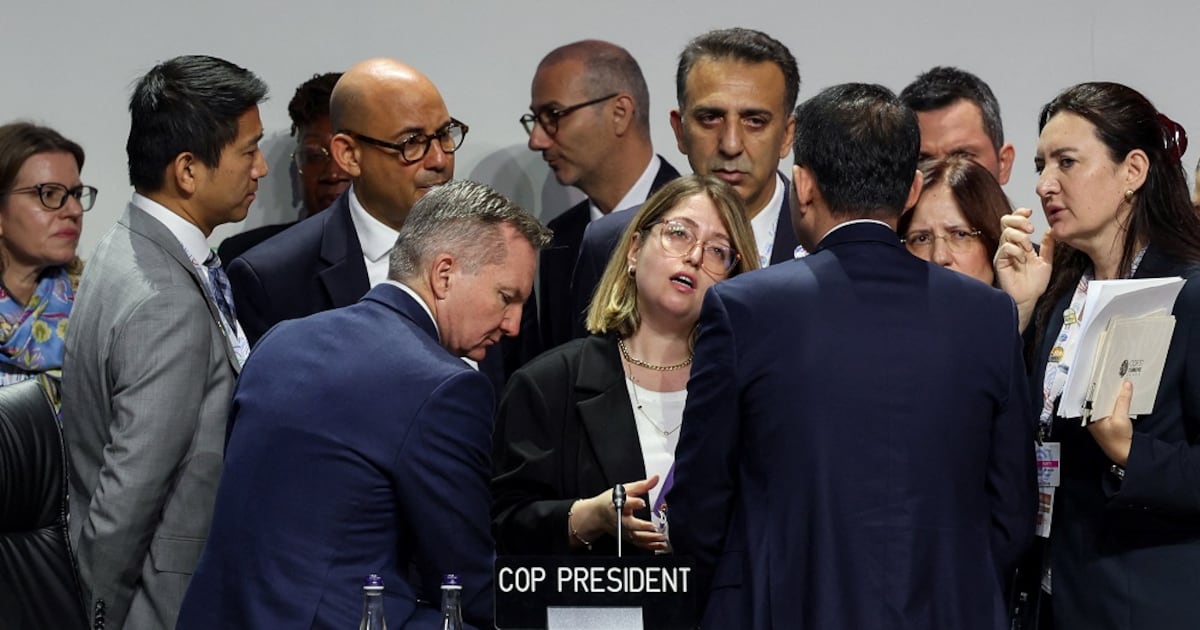
The United Nations climate summit in Antalya ended on Sunday without a deal, after the European Union and other nations rejected the final draft.
COP31 President Murat Kurum announced the collapse at the closing plenary, two days after the talks were supposed to end. "Therefore, these decisions have not been adopted," he told delegates.
“It is clear that there are parties in this hall who oppose this text. We recognise that there is no consensus on this document. Therefore, these decisions have not been adopted.”— COP31 President Murat Kurum
It is the first major breakdown in UN climate talks since Copenhagen in 2009, when countries failed to adopt the Copenhagen Accord by consensus in a setback for multilateral climate diplomacy.
The Details
The final draft, circulated to delegates in the early hours of Sunday, was ten pages long and contained 94 paragraphs. It did not mention fossil fuels, oil, coal, gas or a phase-out anywhere in its text.
Instead, the draft "recalled" the COP28 agreement in Dubai "in its entirety" — the only UN climate cover decision ever to mention fossil fuels — without restating its call to transition away from them.
The draft did set out one headline energy goal: raising electricity's share of total final energy consumption from about 21 percent today to 35 percent by 2035. It also described accelerating carbon capture "with an aim to achieve gigatonne scale globally by 2035 as a collective global aspiration."
On finance, the compromise was thinnest: the draft reaffirmed a commitment to at least triple adaptation finance by 2035, but with no baseline and no dollar figure — the proposed $120 billion annual target had been dropped.
The text would also have been the first COP outcome to acknowledge that the world will overshoot the 1.5 degrees Celsius limit set by the Paris Agreement.
Not everything was lost: decisions on carbon markets under Article 6 of the Paris Agreement were adopted on Friday, and the failure does not wipe out the obligations agreed by previous summits.
How We Got Here
The summit was scheduled to end on Friday, November 20. Instead, the closing plenary was suspended at 10:29 p.m. local time with the biggest questions unresolved, and talks resumed on Saturday.
The central dispute was over missing words: an earlier draft had called for accelerating the phase-out of coal, oil and gas, but a slimmed-down version published on Thursday stripped out every mention of ending fossil fuel use, after objections from Saudi Arabia and other major producers.
A group of about a dozen countries, including France, Panama and Côte d'Ivoire, formally demanded that the final decision include a phrase calling for a "clear transition away from fossil fuels." Panama threatened to block a deal without it.
Late on Saturday, Kurum presented a new version of the text and said he believed the fossil-fuel and adaptation-finance concerns had been addressed. "We believe that we have put forward a text which all the parties can agree upon," he told a late-night plenary. The approval session slipped to 11:00 Antalya time as objections grew — and when it finally opened, the deal died.
Why It Matters
The collapse comes in a year that has seen some of the most destructive impacts of global warming — extreme heat in Europe and glacial floods in Nepal — overshadowed by the demands of wars and public outcry over soaring living costs.
EU Climate Commissioner Wopke Hoekstra had warned the summit should produce "either a good deal or no deal at all." On Sunday, the European Union chose no deal.
Belgium's Climate Minister, Jean-Luc Crucke, was blunt about the choice. "It is unacceptable. It's not the end of multilateralism, but there has to be courage to say no," he said.
The failure leaves the COP process itself under question: the annual summit is the main vehicle through which countries co-ordinate efforts to curb global warming. A summit that ends with no political declaration is a stark signal about the state of global climate cooperation.
What Happens Next
The next summit, COP32, is already scheduled for Addis Ababa, Ethiopia, in November 2027. It will inherit the same unresolved question that broke Antalya: whether the final agreement should name the cause of global warming at all.
For now, the world's governments leave Türkiye with no new climate deal, no restored fossil-fuel language, and no agreed finance target — only the obligations they already had.

Loading comments…