
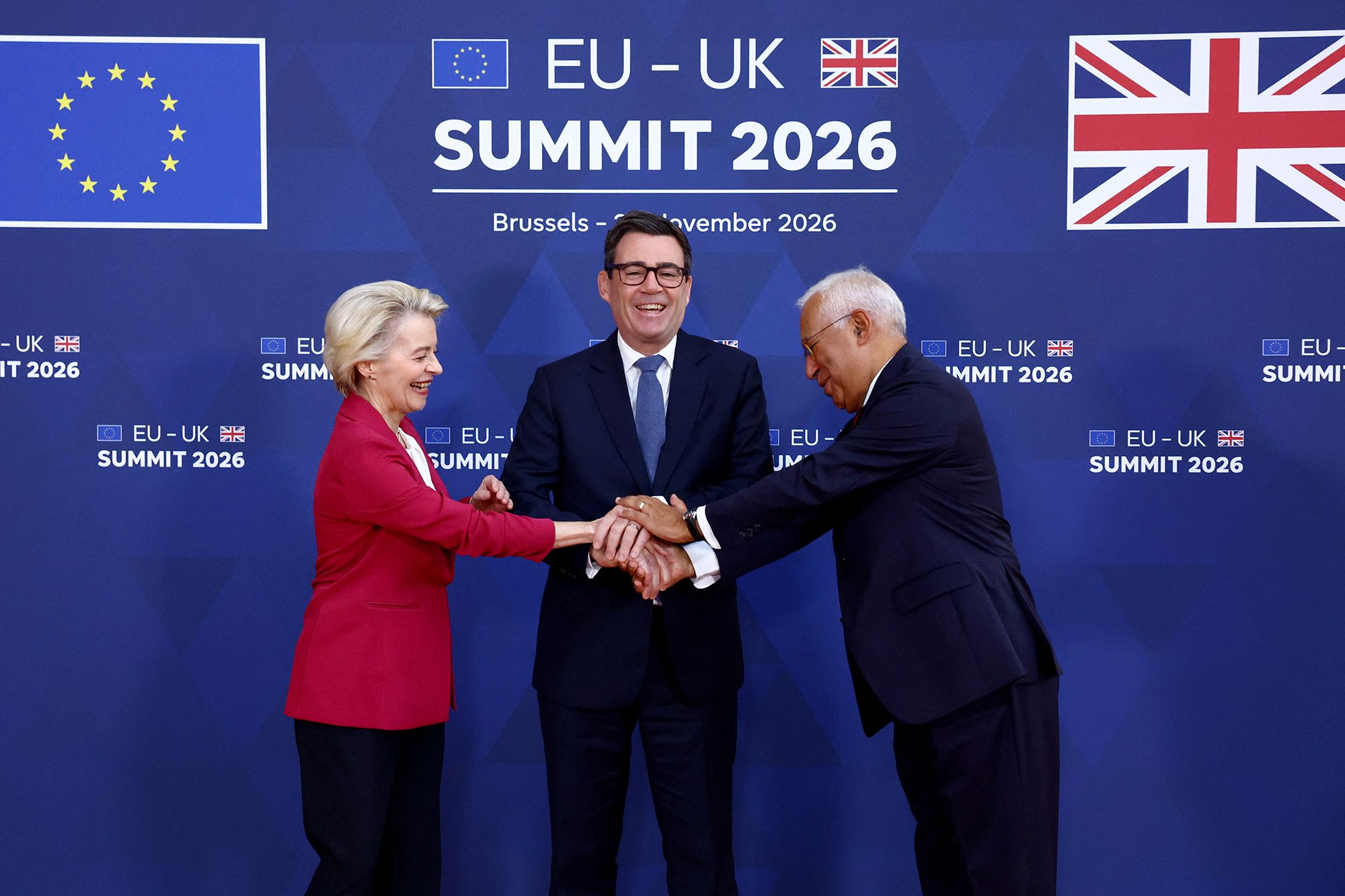
Britain and the European Union sealed their biggest package of agreements since Brexit on Friday, easing food trade, linking carbon markets and opening a youth travel scheme — but left the thorniest question, university tuition fees, unresolved.
At a summit in Brussels, the two sides agreed three deals that Burnham called a "win-win" and von der Leyen a "turning point" in UK-EU relations.
“The agreement that we've reached together is a win-win.”— Andy Burnham, British prime minister
The Details
The most significant deal scraps most checks on cross-border trade in animals, plants and related products, such as sausages and seeds. Britain estimates the change could add up to £5.1 billion ($6.7 billion) a year to its economy.
A second agreement links the emissions trading systems of Britain and the EU, exempting goods such as steel from each other's border carbon levies. A third creates a youth mobility scheme for 100,000 young people a year from each side, aged 18 to 31, to live, work or study in the other's territory for up to three years.
The deals apply from 2028, with the first young people benefiting from youth mobility by January 2030, according to a joint statement. Legislation is expected in the UK Parliament next week.
Burnham said the agreements would add 0.5% to British GDP, a £17 billion boost, while helping to lower supermarket and energy costs.
The One Thing They Could Not Agree On
The summit's one open wound is university tuition fees. EU countries want their students to pay "home fees" at British universities, rather than the international rate, often three times as much. Britain prefers "significantly reduced" fees.
The two sides gave themselves six months to resolve the issue. But in a confidential declaration, the EU indicated it would hold off adopting the three agreements until negotiations deliver equal treatment on fees — a condition that could yet derail the package.
Burnham rejected suggestions there was confusion over the deals coming into force. "The deal is done. It is there in black and white in front of you," he said. Von der Leyen played down the disagreement, saying she was "confident we are going to find a solution".
How We Got Here
A decade has passed since Britain voted to leave the 27-nation bloc, and the rancour of the Brexit years has faded. Both sides now see the need for a closer alliance as the world order is reshaped by Russia's war in Ukraine, US tariffs, China's dominance of critical minerals and war in Iran.
The summit, originally scheduled for July, was postponed after Starmer's resignation this summer. Burnham, prime minister for four months, has staked out a far bolder position, saying on Monday it was an "obvious truth" that Britain had lost more than it had gained from Brexit.
He has also said Britain should consider options for its future relationship including rejoining the EU, and on Friday he committed to talks "about options for our long-term relationship" — though he stressed the deal was "probably the limit" before the next election, due by mid-2029.
Von der Leyen welcomed the opening: "We are open for brainstorming, so count on us." The two sides also agreed a "common prosperity and economic security space", an answer to shared concerns about artificially cheap Chinese goods.
The Other Side
Not everyone celebrated. Nigel Farage, the veteran anti-EU campaigner and leader of Reform UK, held a rival press conference in Brussels on Friday, calling the deal "the first steps, incrementally, to taking us back into membership of the European Union" and again predicting an early election next year.
"I am ready for this fight," Farage told reporters, vowing to campaign to preserve Brexit.
Why It Matters
The package is the most significant step toward closer UK-EU ties since Britain left the bloc. Cheaper food trade, linked carbon markets and a youth scheme all chip away at the frictions Brexit created, while access to "Made in Europe" rules for sectors such as cars could follow if London aligns with EU policy on Chinese electric vehicles.
The two sides also agreed to work towards "diversified and resilient" supply chains in electric vehicles and steel, reviewed every four months.
What Happens Next
The legislation goes to Parliament next week, and the six-month clock on tuition fees starts now. In about a year, Burnham envisages an informal conversation with the EU about what could be achieved next. Whether that conversation stays a brainstorm, or becomes the road back toward membership that Farage fears, will hang over British politics until the next election.




Loading comments…