
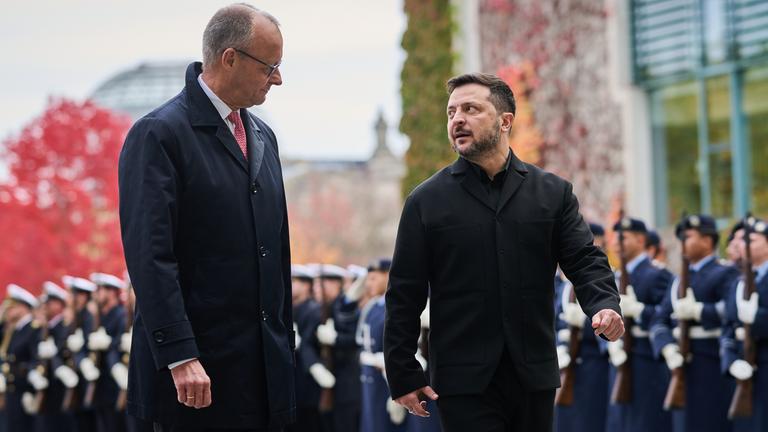
Forty nations gathered in Berlin on Thursday to shape the security guarantees that could follow a ceasefire in Ukraine — and for the first time, Russia's president publicly accepted that Europe should have a seat at the peace talks. The summit was hosted by German Chancellor Friedrich Merz.
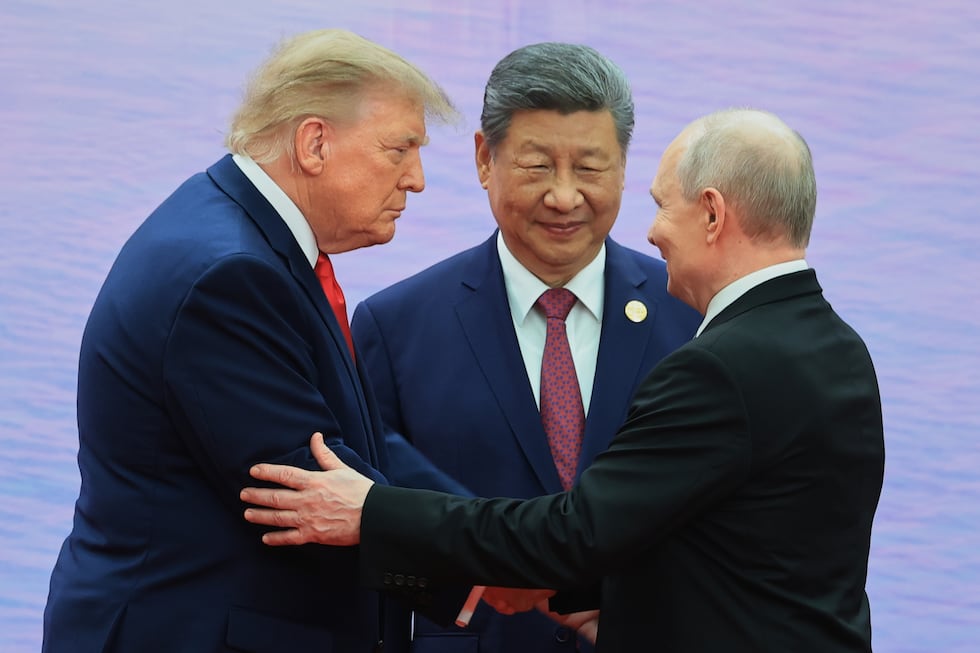
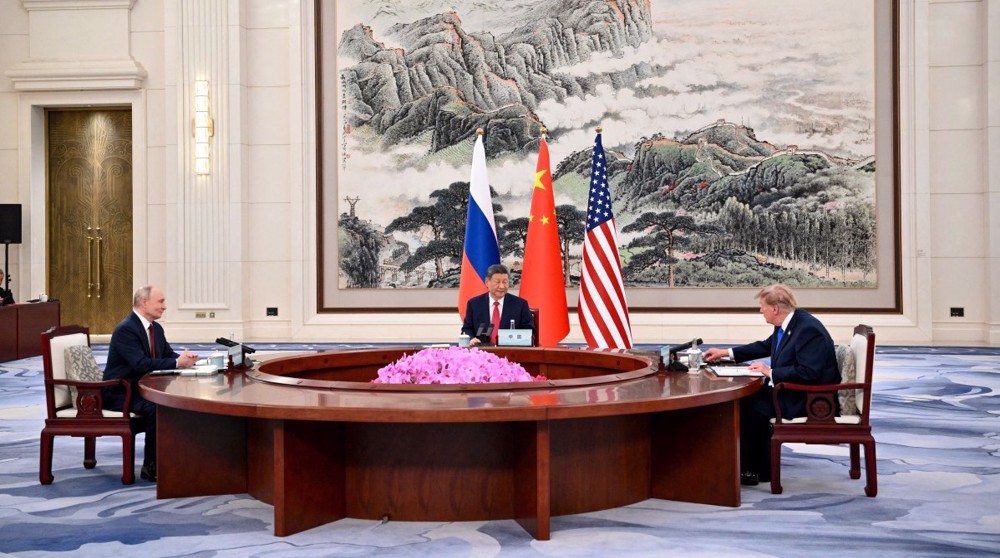
President Volodymyr Zelenskyy attended alongside the American negotiators Jared Kushner and Steve Witkoff, hours after President Donald Trump met Vladimir Putin and Xi Jinping in Shenzhen. Trump himself called into the Berlin meeting, Kushner revealed, and the envoy said the talks "made a lot of progress on what those security guarantees can look like."
“We made a lot of progress on what those security guarantees can look like.”— Jared Kushner, US special envoy
The Details
The Coalition of the Willing — jointly led by Germany, France and the United Kingdom — focused on what happens after the fighting stops. Germany said the discussions would reaffirm the participants' willingness to pursue "robust, legally binding security guarantees coordinated closely with the United States," including a possible multinational force to help regenerate Ukraine's armed forces. NATO Secretary General Mark Rutte attended, with senior representatives from France, Britain, Poland and Italy and EU officials.
No final agreement was reached on deploying foreign troops or on the precise commitments of individual countries. But the leaders agreed on a mechanism for speaking with one voice: national security advisers from Britain, France, Germany, Italy and Poland, together with EU bodies, would represent European interests if the negotiating table opens up to the group. A European negotiating team along the same lines was already agreed at a European Council meeting in Dublin on November 13.
The money followed the words. On November 18 the European Commission proposed up to €45 billion in additional support for Ukraine in 2027, against an estimated €70 billion funding gap — on top of an earlier €90 billion EU loan covering 2026 and 2027. The proposal still needs approval from the European Parliament and the Council. Zelenskyy said the discussions centred on further military support, including air defences and a winter package of anti-ballistic interceptors.
How We Got Here
Europe has spent the war fearing a settlement made over its head. The Shenzhen summit sharpened that fear: Trump, Putin and Xi issued a joint declaration on the UN, nuclear weapons and oil — with no mention of the war in Ukraine — while Putin said there was "nothing wrong with Yalta," the 1945 conference that divided Europe. The Berlin meeting was Europe's answer: coordinate first, then demand a place in the room. Britain arrived with hardware as well as words: a £260 million aid package with more than 1,000 long-range strike drones, and — with Norway — more than £100 million for two advanced 30-metre fast attack boats for Ukraine's navy, built in the UK.
Why It Matters
The headline outcome is the one Zelenskyy demanded. "We are doing everything we can to ensure that Europe is fully represented in the negotiation process and that the meetings lead to results," he wrote on Telegram. Putin's public acceptance — a first, according to the reporting from Berlin — is the concession Europe came for, even if it is only a concession to talk.
The other side of the day was colder. Putin warned in China that there was no prospect of immediate talks, accused Kyiv and Europe of refusing to compromise, and ruled out ceasefires covering the energy sector or the Black Sea after Ukraine's strikes on the Kerch Bridge. "After the strikes on the Crimean bridge, there will be no negotiations," he said. Ukraine said it had struck the bridge again on Thursday — the third time in a week.
The gap between the two messages is the story of the day: a table is being set, and a war is still being fought. The guarantees under discussion are meant to prevent a renewed Russian attack after any ceasefire — the central question for Kyiv, which wants enforceable arrangements rather than political promises.
What Happens Next
The Berlin meeting itself settled nothing about the war's end. The test now is whether the "Team Europe" mechanism and the American talks produce a concrete framework — and whether Moscow, which has ruled out negotiations while the bridge attacks continue, comes to the table at all. The next round of multilateral talks is being prepared. For now, Europe has what it went to Berlin for: a seat, a team to fill it, and money and weapons to back it. Whether the seat becomes a settlement is a question for the weeks ahead.

Loading comments…