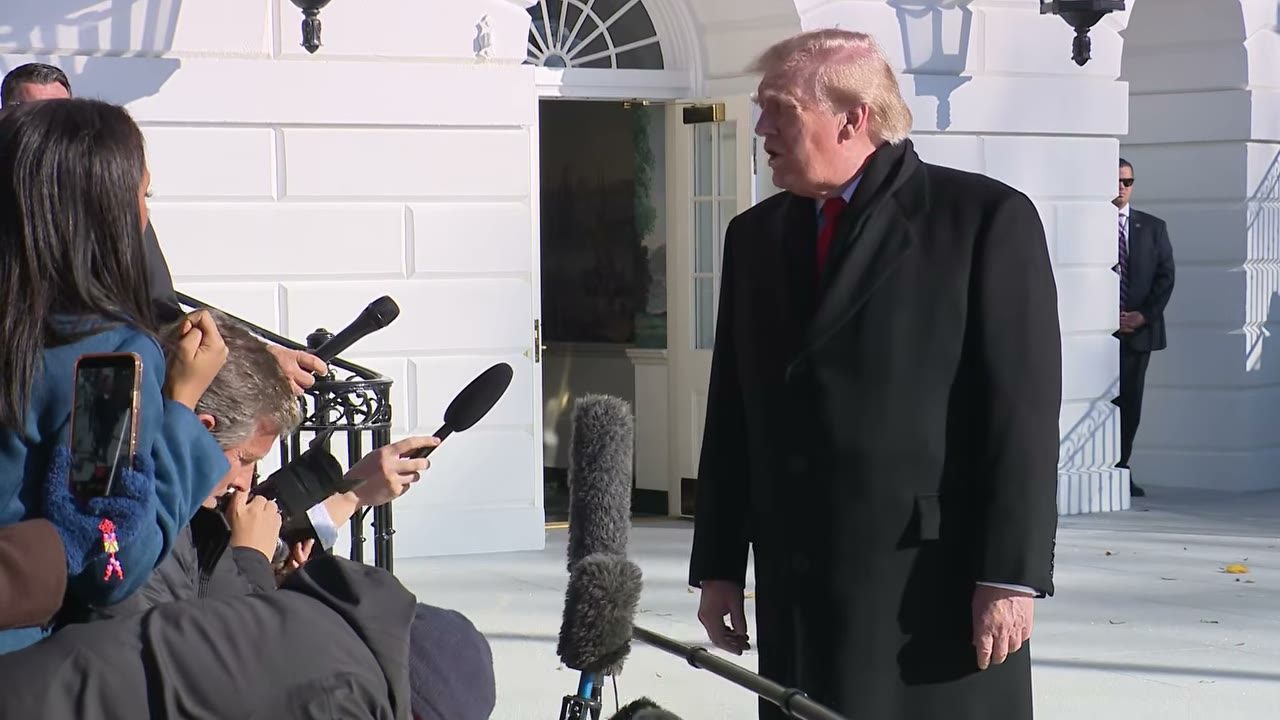
As he left for Asia on Monday, President Trump said Friday's four-hour nationwide ground stop came down to equipment “probably on average 50 years old” — and added, “I don't take any responsibility.” Transportation Secretary Sean Duffy is asking Congress to fast-track $50 billion for a full rebuild of the air traffic control system, up from a $30 billion request just months ago.
The backdrop is a weekend the aviation system will not soon forget: the ground stop, traced to a failure during contractor L3Harris's maintenance work swapping aging copper lines for fiber, contributed to more than 15,000 flight cancellations over 48 hours — the longest nationwide ground stop in 25 years. Homeland Security Secretary Markwayne Mullin said there was no sign of a hostile cyberattack, and FAA Administrator Bryan Bedford said “the worst is behind us.”
“I don't take any responsibility.”— President Donald Trump, on the equipment failure behind Friday's ground stop
“Explain why they need more money”
Democrats are not buying the new request yet. Rep. Rosa DeLauro, the top Democrat on House Appropriations, pointed out that $11 billion of the $12.5 billion Congress already approved for FAA upgrades remains unspent, and called the request “a $50 billion ransom without a real plan to deliver.” Rep. Rick Larsen asked the same question in plainer terms: explain why they need more money.
Duffy's answer is that none of the earlier money can go to the telecom rebuild he says the system needs, and that all of it will be spent by the end of 2028. Sen. Chris Van Hollen signalled some Democrats could still back more funding — “if they need more, they should come up and justify it.”
Duffy makes his case to Senate Republicans at their lunch on Tuesday, and FAA officials brief congressional staff this week. The fight now folds into the December 11 government funding deadline — which raises the question hanging over the whole negotiation: does Congress write the check before the deadline, or does the $50 billion become the next shutdown fight?
The immediate crisis, officials say, has passed. Bedford said full schedules should return by Sunday night, airlines issued no-cost rebooking waivers for stranded passengers, and a formal investigation into the L3Harris maintenance failure is underway. What remains is the argument the failure started: whether a system held together with decades-old equipment needs emergency money, or better management of the money it already has.
That argument has a deadline. The December 11 funding date means the FAA request will not be considered on its own; it will be folded into the larger negotiation over keeping the government open, where every large number becomes leverage. Duffy's Tuesday lunch with Senate Republicans is the opening move in that negotiation, not the end of it.