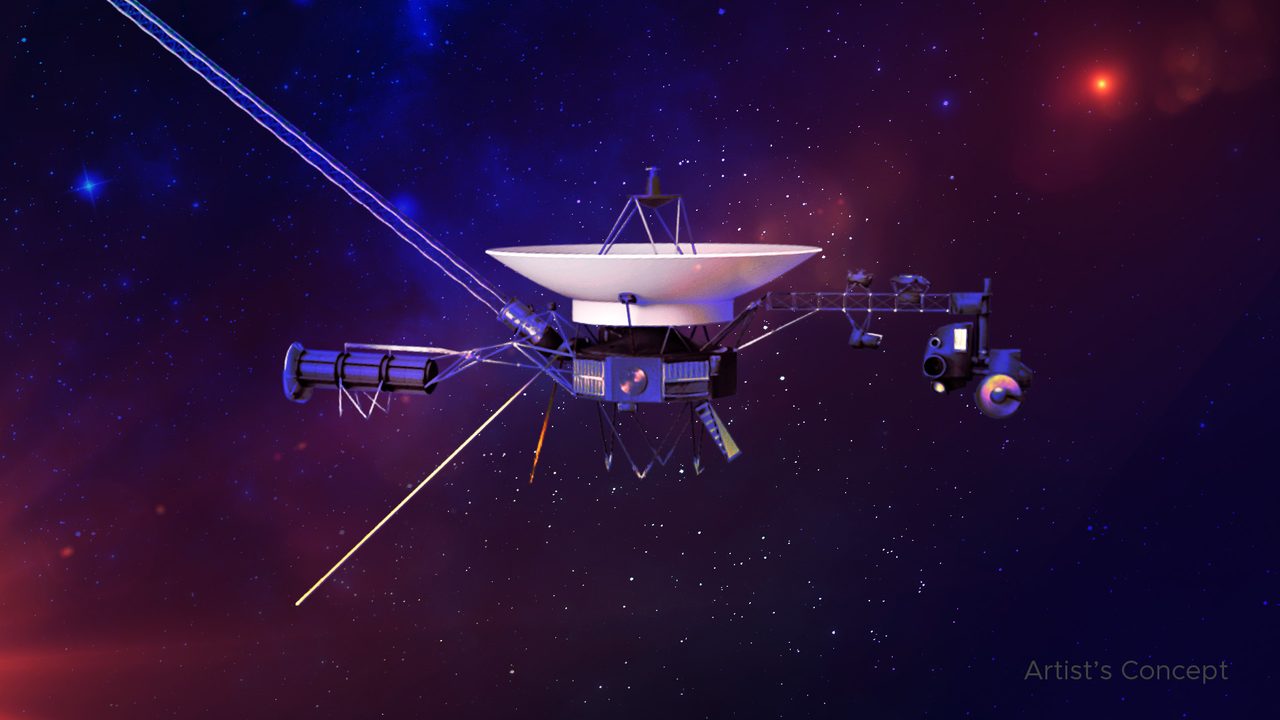
NASA's Voyager 1 crossed a threshold no human-made object has reached before on Wednesday: it is now one light-day from Earth, 25.9 billion kilometers (about 16.1 billion miles) away, and its radio signals take a full 24 hours to make the trip.
The crossing came at 10:16 UTC on November 18, 2026 — 49 years, two months and 11 days after the probe's launch on September 5, 1977. Voyager 1 is traveling at roughly 38,000 miles per hour and is now about 173 times farther from the Sun than Earth is.
Talking in two-day turns
“If I send a command and say 'good morning, Voyager 1,' at 8 am on a Monday morning, I'm going to get Voyager 1's response back to me on Wednesday morning at approximately 8 am.”— Suzanne Dodd, Voyager project manager at NASA's Jet Propulsion Laboratory, speaking to CNN
Every exchange with the probe now runs on a 48-hour round trip. Voyager 1 and its twin, Voyager 2, are the only spacecraft operating outside the heliosphere, the bubble blown by the Sun's wind — Voyager 1 left it in 2012, and Voyager 2 followed in 2018.
The probe still carries the Golden Record, the phonograph disc of sounds and images of Earth chosen as a message to any civilization that finds it. Its signals are caught by NASA's Deep Space Network, whose giant antennas are among the only receivers sensitive enough to hear a transmitter now a light-day away and fading. Over the decades, engineers have switched off instruments and heaters one by one to stretch the remaining power.
A week of looking up
NASA marked the milestone with a public event, "Shine Bright for Voyager's Light-Day," inviting people to step outside after sunset on November 17, with a Jet Propulsion Laboratory panel following on November 19. The probe's plutonium power supply weakens every year; engineers hope to keep the conversation going into the early 2030s.
What Happens Next
Voyager 2 reaches its own light-day in November 2035 — if it is still transmitting. For Voyager 1, every additional day of contact is borrowed time, and each "good morning" now costs two days to answer.



Loading comments…