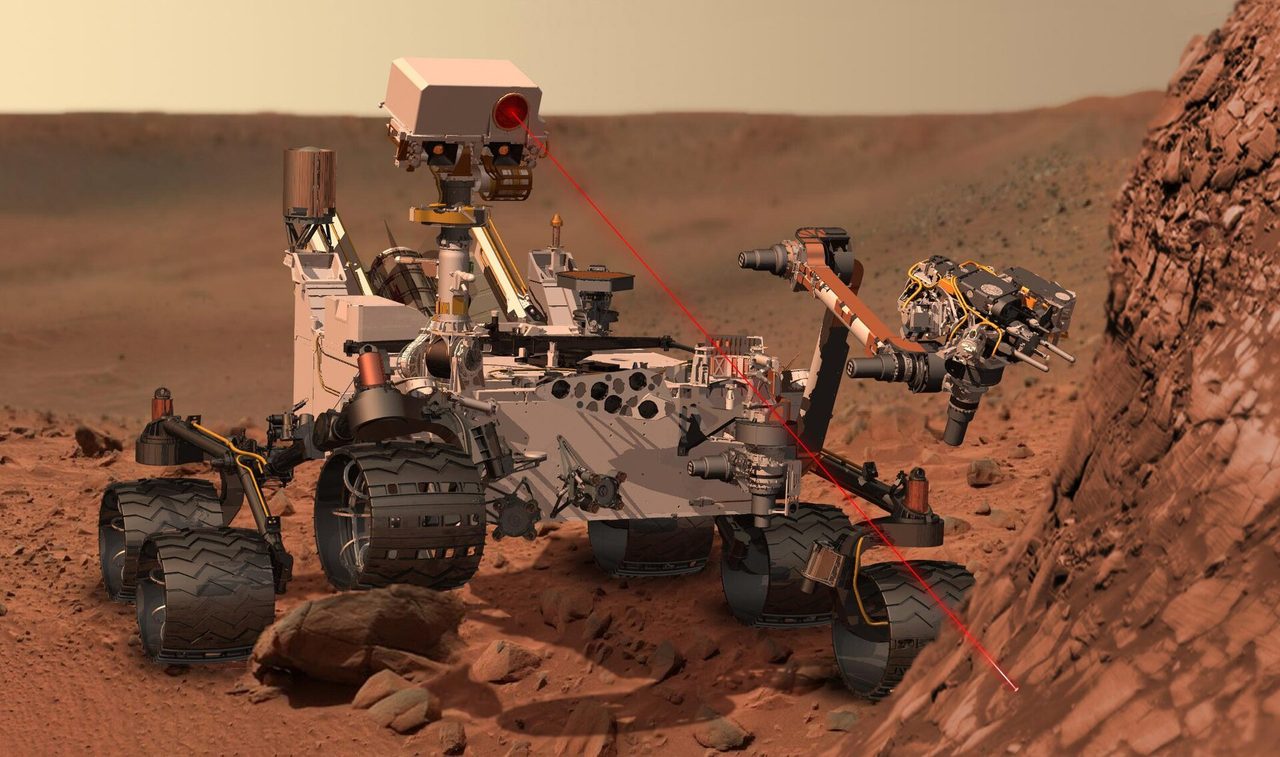
Thirteen years of measurements from NASA's Curiosity rover suggest Mars's thin atmosphere is exchanging material with water at the planet's surface, according to a study published Tuesday in the Proceedings of the National Academy of Sciences.
The team, led by Heather Franz, analyzed the rover's onboard record of carbon dioxide isotopes in Gale Crater from 2012 to 2025 — the first long-term, on-site record of its kind — and found the air's CO2 becomes enriched in heavy oxygen every Martian spring and summer.
A seasonal fingerprint
The enrichment is strongest in southern spring and summer, near Mars's closest approach to the Sun, while seasonal swings in carbon isotopes are smaller and day-to-day changes are insignificant. The pattern, the researchers say, points to a repeating exchange rather than a one-off event.
The record comes from SAM — the Sample Analysis at Mars instrument suite, the rover's onboard chemistry laboratory — and covers nearly seven Martian years in Gale Crater, an ancient lakebed Curiosity has explored since 2012. Isotope ratios work as fingerprints because heavier and lighter versions of the same element move, escape and react at slightly different rates, leaving a trace of the processes they have passed through.
“Mars' carbon dioxide becomes enriched in heavy oxygen each spring and summer — a seasonal fingerprint of exchange with surface water.”— The findings of Franz and colleagues, published in PNAS
Why it matters
If the atmosphere is trading gases with water bound to soil grains — or held in thin, liquid-like films at the surface — it changes how scientists read Mars's climate history, and where they look for environments that could once have supported life. The caveat is geographic: every sample comes from one crater near the equator, so the finding cannot yet be generalized to the whole planet.
What Happens Next
The result gives modelers a 13-year baseline to test against other landing sites and orbiters. The open question is whether the exchange is a local quirk of Gale Crater's soil — or a planet-wide process that has been hiding in plain sight.



Loading comments…