
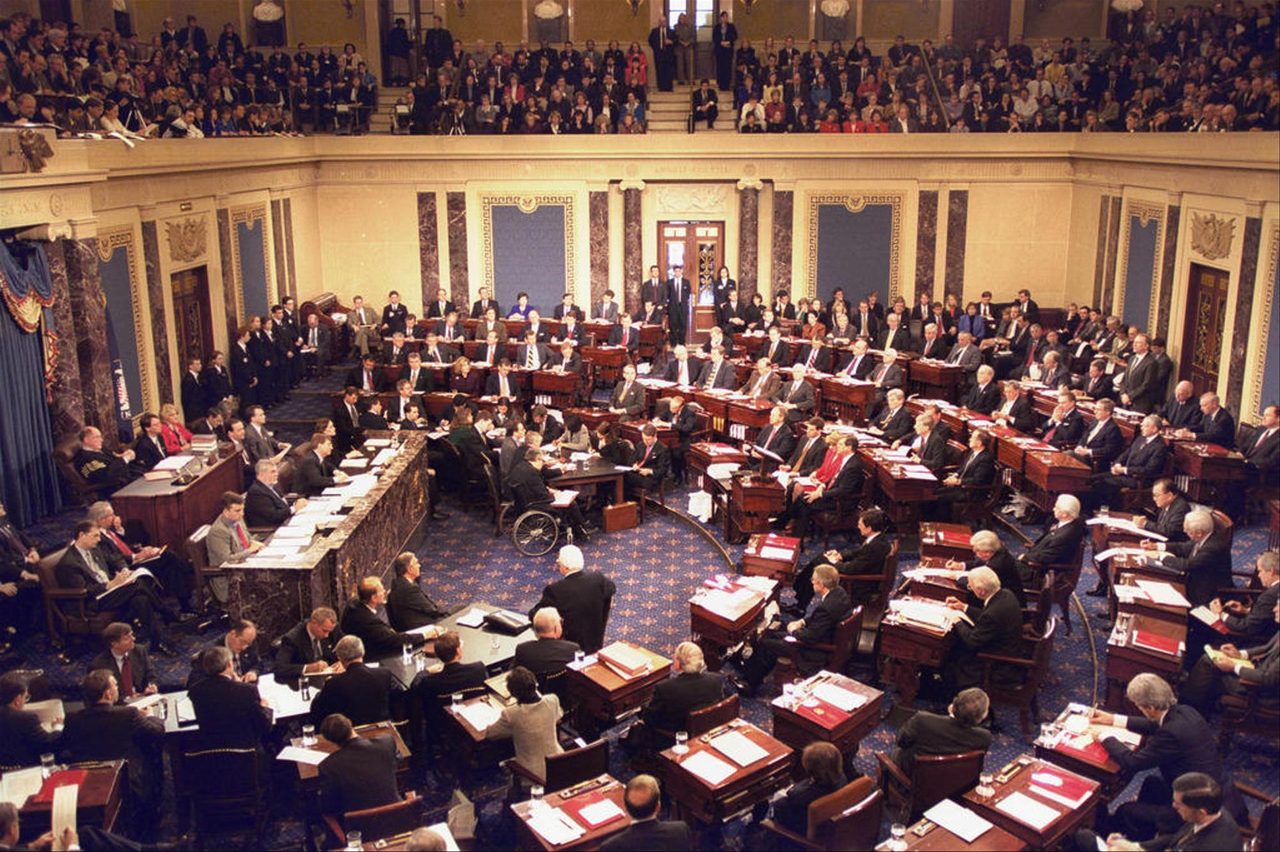
The United States Senate voted 51 to 48 on Thursday to reject a war powers resolution that would have directed President Donald Trump to end hostilities with Iran or obtain Congress's approval to keep fighting — the first vote on the conflict since the midterm elections of November 3.
Only three Republicans voted for the measure: Susan Collins of Maine, Lisa Murkowski of Alaska and Rand Paul of Kentucky. Senator John Fetterman of Pennsylvania was the only Democrat to vote against it, and Senator Chris Murphy of Connecticut, who is recovering from a stroke he suffered last month, did not vote.
The vote was a symbolic victory for the president. The resolution, H.Con.Res. 93, had passed the House in September by 220 to 204, but as a concurrent resolution it would never have reached Trump's desk — and it would not have forced him to end the war. The White House ignored a similar resolution Congress passed in June.
How We Got Here
The war began on February 28, when the United States and Israel opened a campaign against Iran. Nine months later, it is the central fight of the lame-duck Congress — and Thursday's vote was the 21st in Congress on a war powers resolution since the fighting began.
The Senate has voted on the question before. On September 24, it rejected a similar House measure 49 to 50. The tally on Thursday was virtually unchanged, with one exception: Senator Thom Tillis of North Carolina, who voted to end the war in September, voted with Republicans this time.
What changed between the two votes was the election. On November 3, Democrats won majorities in both chambers, and the war — along with the higher food and fuel prices tied to it — was widely seen as a reason for the Republican losses. Senator Tim Kaine of Virginia, who has pressed for years for Congress to reclaim its power over declarations of war, told colleagues before the vote that the results spoke plainly. “Its unpopularity was made absolutely, manifestly clear in the election results of November 3,” he said.
The war's price tag is also now on the record. Arthur Miller, the Pentagon's deputy comptroller for budget and appropriations, told Senator Richard Blumenthal of Connecticut at a Senate Armed Services Committee hearing on Thursday that the conflict had cost $48.3 billion as of November 13.
Republicans who voted no argued the United States could not walk away. Senator Tim Sheehy of Montana spoke against the resolution on Thursday, saying the country could not ignore the threat posed by Iran. His party, which rarely breaks with the president, stood behind Trump.
“Its unpopularity was made absolutely, manifestly clear in the election results of November 3.”— Sen. Tim Kaine (D-Va.), speaking before the vote
Why It Matters
Thursday's vote was the first test of where Senate Republicans stand on the war since they lost nine seats in the midterm elections — and the answer was that the party is still with the president. Three defectors was not enough, and the one Democrat who crossed the aisle, Fetterman, is an outspoken supporter of Israel, Iran's regional foe.
It also showed the limits of the war powers tool. Even if the resolution had passed, it would have been a direction, not an order — and the administration has already shown it will ignore such a vote. The fight that could actually stop the money is still ahead.
That fight is the funding deadline. Democrats have been weighing whether to block money for the war when government funding runs out on December 11, and the vote on Thursday gives both sides their first on-the-record test of the politics: Republicans held, but only by three votes.
What Happens Next
Congress leaves Washington for Thanksgiving and returns on November 30, with eleven days to fund the government. The December 11 deadline is now the next flashpoint, and Democrats have signaled they may use it to cut off funding for the Iran war.
Trump, meanwhile, returns to Washington from his Asia trip on Friday and will hold a news conference at the White House at noon to discuss the trip. The January 1 date he raised in an interview this week — “we'll see what happens after January 1st” — is now the other marker to watch.
For now, the war goes on — by three votes in the Senate, and with the money fight 22 days away.
© 2026 Capitol Wire Daily. All rights reserved. Capitol Wire Daily reports facts from official statements and verified reporting; developing stories are labeled as such.



Loading comments…