
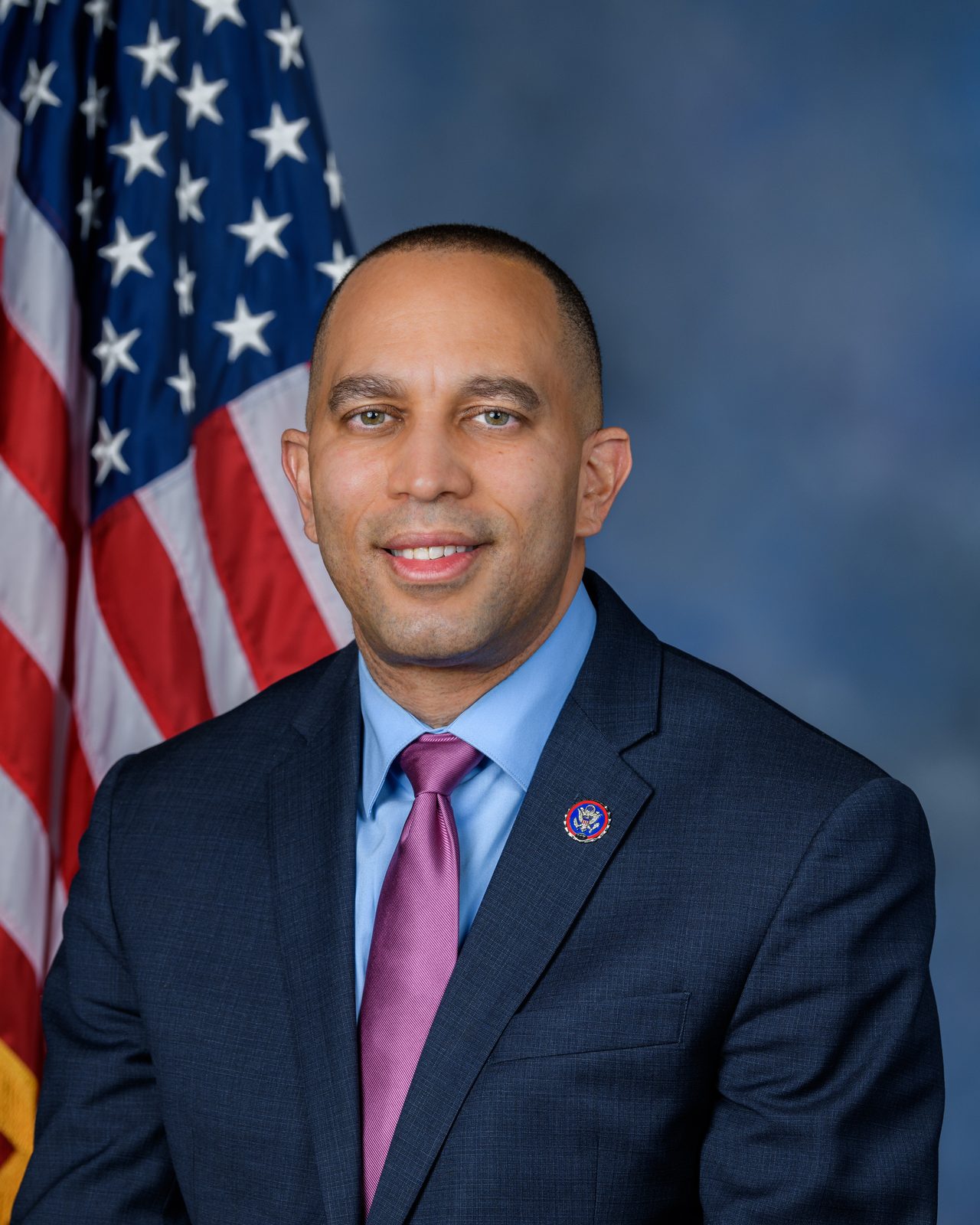
House Democrats nominated Hakeem Jeffries for Speaker on Wednesday, voting 251 to 11 in a closed-door secret ballot — putting the 56-year-old New York congressman one step from becoming the first Black speaker in the 237-year history of the United States House of Representatives.
Jeffries, who has represented Brooklyn's Eighth Congressional District since 2013 and led House Democrats since 2023, ran unopposed for the nomination. Democrats won back the House in the November 3 midterm elections, and with the majority in hand, the formal vote of the full chamber on January 3 is now his to lose. He will need 218 votes on the House floor.
How We Got Here
Jeffries became the first Black lawmaker to lead either party in Congress when Democrats elevated him to minority leader in late 2022, succeeding Nancy Pelosi after the party lost the House. He spent three years leading the minority — through the long fight over the Epstein files, the government shutdown battles and the party's midterm campaign — before voters handed Democrats their largest House majority in years on November 3.
The nomination vote itself was not the coronation some expected. In the weeks after the midterms, a group of newly elected progressives refused to commit publicly to Jeffries, saying they wanted a leader who would push a bolder agenda. Seven of them — Reps.-elect Darializa Avila Chevalier of New York, Adam Hamawy of New Jersey, Frederick Haynes of Texas, Melat Kiros of Colorado, Donavan McKinney of Michigan, Chris Rabb of Pennsylvania and Claire Valdez of New York — said in a joint statement that they voted no because they are still seeking commitments from Jeffries, including votes on Medicare for All and an end to U.S. arms sales to Israel. Rep.-elect Don Leonard told CNN he also voted against the nomination, pressing for action on money in politics and blocking aid to Israel.
The split inside the party
The Congressional Progressive Caucus congratulated Jeffries in a separate statement, pledging to work with him to pass "the first year of Medicare for All, an end to for-profit immigrant detention centers, and so much more." Rep. Pramila Jayapal, a former chair of the caucus who voted for Jeffries, said it was legitimate for new members to "want to respond to the anger of the moment that's out there."
“It's legitimate for new members to want to respond to the anger of the moment that's out there.”— Rep. Pramila Jayapal, who voted for Jeffries, on the progressive dissent
Not everyone in the party welcomed the dissent. Rep. Hillary Scholten, a centrist from Michigan, complained that "infighting over leadership positions" would not help deliver on campaign promises. Former Speaker Nancy Pelosi, who faced her own defectors during her leadership runs, downplayed the impact of the 11 no votes.
Why It Matters
The speakership is the most powerful job in Congress — the only leadership position in the legislative branch written into the Constitution, and second in the line of succession to the presidency. Since the House first convened in 1789, no Black American has held the gavel. Jeffries would break a barrier that has stood for 237 years, and he would do it at the head of the largest Democratic House majority in years.
The 11 no votes matter, too. They are a reminder that the new majority arrives with its own internal negotiation still unfinished: the progressive wing wants votes on its priorities written into the first year, while the leadership wants unity before the new Congress even convenes. How Jeffries handles that tension — whether he offers commitments before January 3 or asks the dissenters to wait — will shape the first months of his speakership, if he wins it.
What Happens Next
The formal election comes on January 3, 2027, the first act of the new Congress, when all 435 members vote for speaker on the House floor. Jeffries's allies — and even his detractors — expect him to win easily. Democrats also filled out the rest of their leadership team on Wednesday, electing Rep. Ted Lieu as caucus chair and Rep. Lauren Underwood as vice chair.
Until January, the open question is whether Jeffries moves to close the gap with his 11 critics. The progressives have said they are still working to secure commitments. The leadership has said little in public about what, if anything, it will offer. The vote on Wednesday settled who leads the House Democrats. The vote on January 3 will settle whether the first Black speaker in American history takes the gavel — and on whose terms.
© 2026 Capitol Wire Daily. All rights reserved. Capitol Wire Daily reports facts from official statements and verified reporting; developing stories are labeled as such.



Loading comments…